

REVIEW · KIBERA TOURS
Kibera Chocolate City Tour
Your Nairobi views change fast in Kibera. This 2 to 3 hour, guide-led walk through Kibera in Nairobi is built to challenge stereotypes, show daily life, and highlight community resilience in a way that feels practical, not preachy.
I love that you go with local guides, including names like Collins, Rama, and Allan in past groups, who can explain Kibera with context. I also love the mix of stops, from Toi Market to the Victoria Bones Craftshop, and then on to the school and library connected to Agape.
My only caution is emotional readiness. You’re stepping into a real place with real challenges, so come prepared to be thoughtful, not shocked into spectacle, and expect moments that hit harder than photos.
In This Review
- Key things I’d bookmark before you go
- A Kibera tour that gives you more than a photo stop
- Meeting at Kibera Town Centre, and why timing matters
- Kibera Town Centre: start with real bearings, not assumptions
- Toi Market: where work happens in plain sight
- Victoria Bones Craftshop: creativity you can support directly
- Agape school and library: education and play in the middle of daily life
- The historical railway walk: context you’ll remember
- What the $22 price buys you, and why it can feel fair
- How to act in Kibera, so your visit is respectful and safe
- Who should book this Kibera Chocolate City Tour
- Should you book it?
- FAQ
- How long is the Kibera Chocolate City Tour?
- What does the tour cost?
- Where do I meet for the tour?
- What stops are included?
- How big is the group?
- Is it a mobile ticket?
- Are service animals allowed?
- Can I cancel for a full refund?
- Does the tour depend on weather?
Key things I’d bookmark before you go

- Local-led route that aims to break stereotypes, not score pity points.
- Toi Market + Victoria Bones Craftshop for firsthand looks at everyday work and making things.
- Agape school and library visit, focused on children’s education and play.
- A walk past the historical railway to give you bigger-picture context fast.
- Up to 30 people max, so it stays manageable and you can still ask questions.
- Good-weather dependent timing, so check the forecast before you rely on a specific date.
A Kibera tour that gives you more than a photo stop

Kibera isn’t a backdrop. It’s a home for thousands of people, with businesses, skills, schools, friendships, and routines that do not exist for visitors. That’s the core idea behind this tour, and it matters, because the way you visit shapes what you think you’re seeing.
This experience runs for about 2 to 3 hours, and it stays anchored in the Kibera Town Centre area. You’ll move through key community points, so you get a sense of how people live and how they make income, not just how the neighborhood looks from the outside.
The guide team is central to the whole deal. In past groups, Collins, Rama, and Allan have been named as guides, and that local connection shows up in how they explain things: day-to-day life, the history people remember, and the vision people have for what comes next. If you like asking questions and getting straight answers, you’ll likely feel at ease.
More City Tours in Nairobi
- Nairobi Historical Walking City Tour
★ 5.0 · 258 reviews - Nairobi City Walking Tour with Traditional Kenyan Lunch
★ 5.0 · 106 reviews - Nairobi Cultural and Historical City Tour with a Local
★ 5.0 · 67 reviews
Meeting at Kibera Town Centre, and why timing matters
You meet at Kibera Town Centre, Kamukunji Grounds, Nairobi, and the tour ends back at the meeting point. That loop is simple and helpful, especially if you’re trying to fit this into a packed Nairobi schedule.
The tour operates daily, 8:00 AM to 6:00 PM, with the service running across multiple years. Average booking time is about 17 days in advance, which is a good clue that popular time slots can fill.
Two practical notes you should plan around:
- The tour requires good weather, so keep some flexibility if you’re traveling during a rainy stretch.
- The experience uses a mobile ticket, which is great, because you won’t be hunting for paper confirmations at the last second.
Group size is capped at 30 travelers. That sounds large on paper, but for a short walking tour, it usually means you’re not stuck in a one-file line for every stop. You should still expect some walking and some waiting at each point.
Kibera Town Centre: start with real bearings, not assumptions
The tour begins at Kibera Town Centre, and that first step is key. This is where you stop thinking in stereotypes and start building a map in your head. The guides focus on how life works in the area, what people do day to day, and what outsiders often misunderstand.
You’ll also get an early sense of the community’s energy. It’s not silent, not staged, and not frozen in one image of hardship. The intention is to show you the present, while still giving context for why the neighborhood looks the way it does.
A small but important thing: the tour is designed to be respectful and awareness-focused. That means you’re there to learn, not to treat residents like a walking museum exhibit. If you keep that mindset from the start, the whole experience feels smoother and more human.
Toi Market: where work happens in plain sight

Next, you visit Toi Market, a place where you can see local business life up close. This stop is valuable because it’s not an abstract lesson about poverty or inequality. It’s commerce, customers, sellers, and the everyday logic of how people earn a living.
What I like about a market stop like this is that it forces balance. Instead of only asking, How do people survive, you also start asking, What do people trade, make, sell, and improve? That shift is exactly what helps you avoid one-note storytelling.
If you’re hoping to interact, this is often the best point of the tour for it. You can ask questions about what’s sold, how business works at different times of day, and what people value in their community. Just remember, conversation is a two-way street. Keep it respectful and short if people seem busy.
More Kibera Tours in Nairobi:
- Nairobi: Explore Kibera Slum with Local Guides
★ 4.9 · 365 reviews - Kevins Kibera Slum Tours
★ 5.0 · 213 reviews - Nairobi: Kibera Slum storytelling tour with a Local
★ 5.0 · 185 reviews - Kibera Slum Tour with Lucas
★ 5.0 · 119 reviews
Victoria Bones Craftshop: creativity you can support directly

After Toi Market comes a visit to the Victoria Bones Craftshop. Craft shops can be hit or miss on tours if they turn into a quick sales stop. Here, the better framing is that it connects you to hands-on making and local creativity within the community.
This stop is also practical for you as a visitor. If you want a souvenir that feels connected to the place, this is the kind of place where that can make sense. You’re not just grabbing something because it looks Kenyan. You’re seeing the work behind it.
I also like how this stop supports the tour’s overall goal of challenging stereotypes. Kibera is not only about what’s missing. It’s also about ingenuity, skill, and the decision to keep building.
Agape school and library: education and play in the middle of daily life

One of the tour’s standout elements is the visit to the school and library where the children of Agape get education and play. This is where the experience becomes more than walking and talking. It becomes personal, because you’re seeing learning and childhood in action.
This stop can be emotional, and not in a dramatic, movie-scene way. It’s more like a quiet reminder that education and safety matter everywhere. Kids playing is not a distraction from hardship, it’s part of what keeps life moving.
To make this stop go well, keep your behavior calm and considerate. Take cues from your guide. If people are focused on teaching or play, your job is to be an observer who does not interrupt. If you do want to interact, ask first through your guide rather than trying to jump ahead.
From a value perspective, this stop is part of the tour’s biggest promise: you leave with knowledge about how residents live and support one another. You’re not just leaving with feelings.
The historical railway walk: context you’ll remember
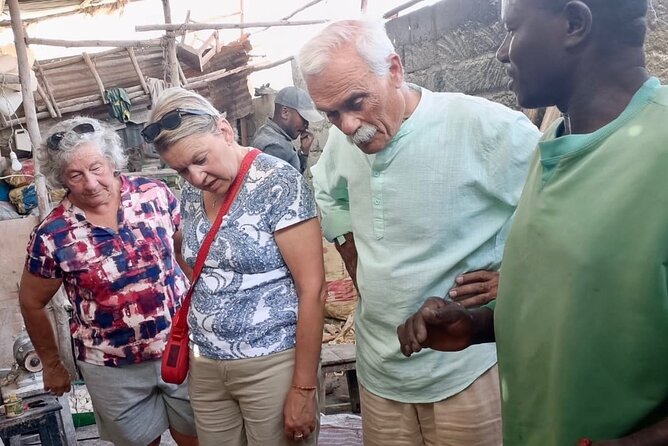
After the education stop, you’ll walk by the historical railway. This is one of those moments that quietly helps you understand scale and geography. You see how the built environment shapes movement, opportunity, and everyday routines.
Guides use this point to give you a broader view of Kibera. It helps you place what you saw earlier into a wider picture, so the tour doesn’t feel like a set of disconnected stops.
This stop also works well for photos, but the real payoff is mental. You’ll likely find that your brain starts organizing the area like a real place with logic and connections, not like a “before and after” story.
What the $22 price buys you, and why it can feel fair

The tour costs $22 per person, runs roughly 2 to 3 hours, and does not list separate admission fees for the main activities. So you’re paying mostly for the guide experience and the time it takes to route you through the community responsibly.
That price can feel tourist-friendly compared to some Nairobi excursions, and the real value comes from access. You’re not arranging this on your own in a safe, structured way. The guide helps you interpret what you see and reduces the risk of misunderstanding what’s happening around you.
Also, the tour is built around a focus on education through Agape and community awareness. In plain terms, it’s the kind of experience where your money is tied to a local mission, not only to transportation and a scripted speech.
Could $22 still be a lot for some budgets? Sure. But if you want a different lens on Nairobi, this is one of the more straightforward ways to get it, without pretending you can understand Kibera in a single afternoon.
How to act in Kibera, so your visit is respectful and safe
This is the part many tour reviews avoid. I won’t. If you book a tour like this, your job is to be decent, because you are walking through people’s lives.
A few common-sense rules:
- Follow your guide’s lead on where to stand, how to walk, and when to move on.
- Don’t pose for photos of people in vulnerable moments. If you want an image, ask first through your guide.
- Keep conversations short if someone is busy. Markets and daily routines do not pause because you arrived.
- If you feel overwhelmed, that’s normal. Take a breath and let the guide reframe things with context.
From the names and stories associated with the guide team, the vibe tends to be welcoming and taken care of. Past visitors have described feeling safe and treated warmly, and that usually comes from guides setting the tone early.
One more tip: wear comfortable shoes. You’ll be walking between several community points in a short timeframe.
Who should book this Kibera Chocolate City Tour
This tour is a strong fit if you want:
- A local-led explanation of Kibera, with stops that go beyond surface views.
- A short, focused experience that still includes market life and an education stop.
- A tour that actively tries to break stereotypes while honoring real challenges.
It may be less ideal if you:
- Prefer purely scenic sightseeing and zero emotional weight.
- Want long, sit-down museum-style pacing. This is walking and interacting, not lounging.
- Need a fully predictable route at all costs. It’s weather dependent, and community conditions can affect how quickly you move.
If you can handle an honest look at life in a dense neighborhood, you’ll likely find this tour becomes one of the most memorable parts of your Nairobi trip.
Should you book it?
Yes, if you want a guided, respectful way to understand Kibera beyond headlines. The structure is solid: Kibera Town Centre, Toi Market, Victoria Bones Craftshop, the Agape school and library, and then the historical railway for wider context. For $22 and around 2 to 3 hours, it’s an efficient, high-impact choice.
Book it with the right mindset. Come curious, be respectful, and expect a human experience, not a slideshow. If you do that, you’ll leave with more than photos. You’ll leave with a clearer, more grounded view of Nairobi and the people who live there.
FAQ
How long is the Kibera Chocolate City Tour?
It runs for about 2 to 3 hours.
What does the tour cost?
The price is $22.00 per person.
Where do I meet for the tour?
You meet at Kibera Town Centre, Kamukunji Grounds, Nairobi, Kenya. The tour ends back at the meeting point.
What stops are included?
You will start in Kibera Town Centre and visit Toi Market, Victoria Bones Craftshop, the school and library connected to Agape, and then walk by the historical railway.
How big is the group?
This tour/activity has a maximum of 30 travelers.
Is it a mobile ticket?
Yes, the tour uses a mobile ticket.
Are service animals allowed?
Yes, service animals are allowed.
Can I cancel for a full refund?
You can cancel up to 24 hours in advance for a full refund. If you cancel less than 24 hours before the start time, no refund is provided.
Does the tour depend on weather?
Yes, this experience requires good weather. If it is canceled due to poor weather, you will be offered a different date or a full refund.
Newest write-ups from Nairobi
- Visit kibera Slum the chocolate city★ 4.8 · 3 reviews
- 3 days maasai mara migration safari★ 4.5 · 7 reviews
- 4 Days Safari to Lake Nakuru N/P and Maasai Mara N/R★ 5.0 · 18 reviews
- 4 Days Tour Landcruiser in Masai Mara and Lake Nakuru★ 5.0 · 10 reviews
- Day Tour to Nairobi national park, Elephants, and Giraffe Center★ 3.5 · 8 reviews
- Wildebeest Migration in Masai Mara and Sightseeing 4 Days Tour★ 4.5 · 6 reviews
- Maasai Mara Day Trip★ 5.0 · 15 reviews
- Kibera Slum Tour with a Local★ 5.0 · 15 reviews
Kibera Tours, compared.





Kibera Slum Tour with Local Social Entrepreneurs
Read our review →


Browse the lists this tour appears in