

REVIEW · KIBERA TOURS
Visit kibera Slum the chocolate city
Kibera feels real, fast. This guided walk through Kibera, Nairobi’s largest informal settlement, gives you a direct look at daily life in Kenya, with a live guide who keeps the story clear and grounded. It also helps you notice details you would easily miss on your own, especially as you move through the area.
I also like the community engagement focus, with time to interact with local residents and community leaders. Plus, you’ll see how empowerment efforts connect to education, skills training, and community development, not just slogans on a sign.
A key consideration is that this is a marginalized community. You should be ready for sensitive realities, and you’ll want to keep a respectful, low-key approach throughout the visit.
In This Review
- Key things that make this tour worth your time
- Kibera, Nairobi’s Chocolate City, seen through a guided lens
- Meeting at Equity Ayani: keeping the start simple
- The 2.5-hour walk in Kibera: what you’re really doing
- Community engagement with residents and community leaders
- Empowerment projects: education and skills you can connect to real needs
- Cultural insights beyond the stereotypes
- Historical context that explains today’s urban pressures
- Responsible tourism: how to visit marginalized communities with respect
- Price and value: is $25 fair for 150 minutes?
- Who this tour suits best
- Should you book this Kibera tour?
- FAQ
- How long is the Kibera tour?
- Where does the tour start, and is pickup included?
- How much does the tour cost?
- What languages are available for the live tour guide?
- What is included in the price?
- Can I cancel for free or pay later?
Key things that make this tour worth your time

- Live guide, multiple languages: English is available, plus Chinese, Esperanto, German, Italian, Spanish, and French.
- Community-led conversations: You interact with residents and community leaders to understand daily life firsthand.
- Empowerment projects you can see in action: Education, skills training, and community development are part of the visit.
- Art, music, and entrepreneurship: Cultural expression shows up in everyday ways, not just performances.
- History that explains the present: You get context on Kibera’s development and how it fits urbanization challenges in Kenya.
- Fast, focused format: At 150 minutes, it’s long enough to learn, but not so long you feel wiped out.
Kibera, Nairobi’s Chocolate City, seen through a guided lens

Kibera is often called the Chocolate City, and there is something about the nickname that sticks in your head. The tour experience here is not about turning hardship into a spectacle. It’s about understanding how people build community, solve problems, and keep going, even under tough conditions.
I like that the tour is guided and structured. With a live guide, you get context as you walk, instead of guessing what you’re seeing. And because it’s a Nairobi setting, you’re also watching how a large city absorbs and reshapes human lives at street level.
You also get a human pace. I find guided visits work best in places where meaning is local, not tourist-friendly. You’re there to listen, ask questions appropriately, and connect the dots between culture, history, and today’s challenges.
More City Tours in Nairobi
- Nairobi Historical Walking City Tour
★ 5.0 · 258 reviews - Nairobi City Walking Tour with Traditional Kenyan Lunch
★ 5.0 · 106 reviews - Nairobi Cultural and Historical City Tour with a Local
★ 5.0 · 67 reviews
Meeting at Equity Ayani: keeping the start simple
The tour starts at Equity Ayani. That matters because a clear meeting point reduces stress, and it helps the group get moving quickly. For you, this means less time searching and more time actually being part of the visit.
Equity Ayani also sets expectations. You’re beginning from an organized, recognizable point, then transitioning toward a neighborhood where the pace, routines, and infrastructure can look very different. A well-run guide helps you make that switch without turning it into chaos.
Pickup is not included, so plan to reach the meeting spot on your schedule. If you’re coming from farther away, give yourself buffer time. In a city, “close by” can still be slow once traffic and walking are included.
The 2.5-hour walk in Kibera: what you’re really doing

The core of the activity is a 2.5-hour block in Kibera. You’ll be walking, sightseeing, and taking scenic views on the way, so expect a moving visit rather than a sit-down experience. That format is important because Kibera is best understood through motion, the way neighborhoods reveal themselves block by block.
Here’s what the time is for. You’re not just passing through. The visit is designed around interaction, learning, and seeing community efforts connected to real places. That takes time, because conversations and explanations do not fit into a five-minute photo stop.
One practical consideration: because the visit is walking-based, it helps to wear footwear you trust. Keep your focus on the experience, not on adjusting your shoes every few minutes. Also, if you want to take photos, be thoughtful and ask first when appropriate. In communities like this, respect is part of the tour value.
Community engagement with residents and community leaders

This tour’s biggest strength is the community engagement piece. You don’t just see structures. You hear perspectives. That usually changes how you interpret what you’re seeing.
Interacting with residents and community leaders gives you context on lived experiences and on-the-ground initiatives. You get a sense of what people are working on, what’s working, and what remains difficult. Even when answers are complicated, that’s often the point. Life here is not a simple story, and the tour aims to reflect that realism.
I also like that this is handled by a guide, because local context can be nuanced. A good guide helps you ask better questions, and it helps you understand the boundaries of what’s appropriate to discuss. One booking specifically highlighted a guide named Daniel as super gentle and very professional, and that kind of approach matters in a setting that demands sensitivity.
More Kibera Tours in Nairobi:
- Nairobi: Explore Kibera Slum with Local Guides
★ 4.9 · 365 reviews - Kevins Kibera Slum Tours
★ 5.0 · 213 reviews - Nairobi: Kibera Slum storytelling tour with a Local
★ 5.0 · 185 reviews - Kibera Slum Tour with Lucas
★ 5.0 · 119 reviews
Empowerment projects: education and skills you can connect to real needs

Another highlight is the stop(s) connected to empowerment projects. The tour focuses on how local organizations and social enterprises work to support Kibera’s residents through education, skills training, and community development.
What makes this valuable for you is the link between learning and action. It’s easy to say a community needs support. It’s harder to see what support looks like. When the tour includes education and skills training, you start to understand how change can happen through everyday pathways, not only through large, distant programs.
The tour’s responsible angle is also built into this section. You’re learning about initiatives rather than consuming someone’s hardship as entertainment. If you want to leave with a clearer sense of what helps, these stops are where your brain connects the dots.
Cultural insights beyond the stereotypes
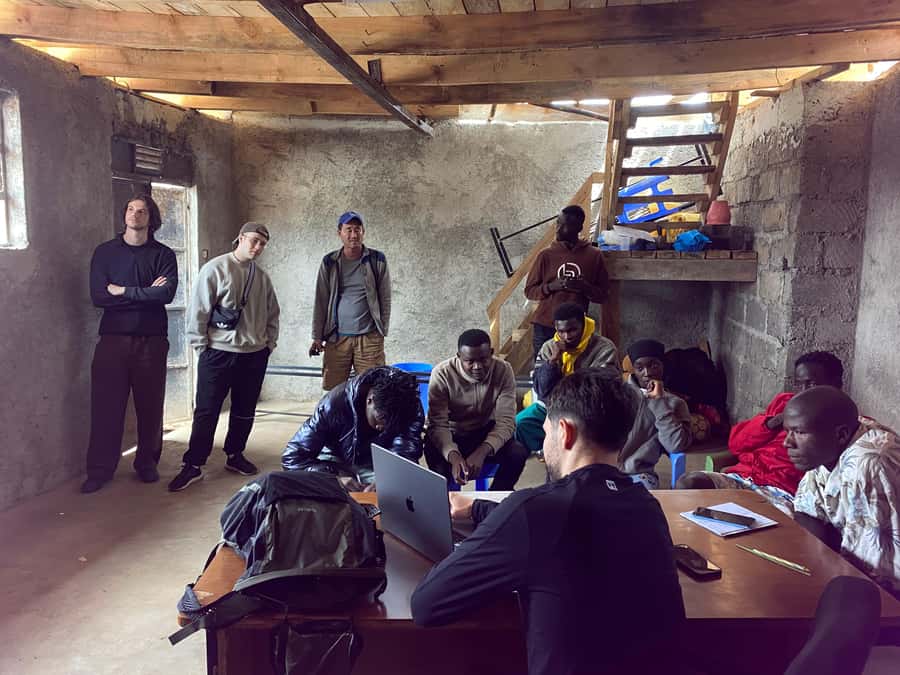
Kibera has its own cultural rhythm, and the tour is designed to show that through art, music, and entrepreneurial spirit. That matters because it challenges the idea that places like this are only defined by lack. People create, trade, perform, and experiment with ideas, just like anywhere else.
When you experience cultural expression as part of daily life, you get a more accurate picture. You stop seeing the neighborhood as a single “type” and start understanding it as a living community made of people with varied talents and roles.
Even in a short 150 minutes, these cultural notes can change your entire impression. You’ll likely notice how creativity and commerce appear alongside community routines. It feels less like observing and more like recognizing.
Historical context that explains today’s urban pressures

You also get historical context on Kibera’s development and how it fits into broader urbanization and social challenges in Kenya. This is not just trivia. History helps you understand why certain patterns persist and why some problems are hard to solve quickly.
For you, the value is perspective. Without context, you might interpret what you see as random or isolated. With context, you understand it as part of a larger system, shaped by growth, planning challenges, and social realities that affect many cities, not only Nairobi.
If you enjoy learning in a practical way, this history segment helps you connect the present visit to bigger themes. It turns the tour from a visual experience into a grounded understanding of how cities work.
Responsible tourism: how to visit marginalized communities with respect
Responsible tourism isn’t a slogan here. It’s the core ethic built into the experience. The tour explicitly frames ethical considerations, emphasizing respect, understanding, and support for local initiatives.
Here’s how that translates into how you should show up:
- Keep your tone respectful during conversations.
- Ask questions that invite information, not judgment.
- Don’t treat people’s lives as background scenery for your camera.
I also think responsible tourism means you pay attention to what the tour is actually trying to show. The visit is designed to highlight community initiatives and cultural strength, not to reduce people to one story. When you follow that direction, your experience becomes better, and it’s less likely to cause discomfort.
Price and value: is $25 fair for 150 minutes?
The price is $25 per person for a 150-minute experience, with a live tour guide included. For many people, that’s the deciding factor: is it worth it compared with other ways to spend a morning or afternoon?
I think the value comes from three things:
- Time with a guide: You’re not just walking, you’re learning while moving.
- Community and initiatives focus: The tour centers conversations and empowerment efforts, which changes the payoff of your time.
- Multilingual guide options: You can choose among several languages, which makes the tour more accessible and reduces the “lost in translation” problem.
Also, the activity notes indicate skip-the-ticket-line. Since an entrance fee is not included, it sounds like there may still be some form of entry process or check-in. Either way, the practical point is that you’re less likely to waste time waiting and more likely to spend it with the guide and in the community.
Who this tour suits best
This is a strong fit if you:
- Want a guided, context-heavy visit rather than a quick photo stop.
- Appreciate cultural insight tied to real community efforts.
- Prefer a shorter time commitment, 150 minutes, that still covers major themes like culture, empowerment, and history.
It may not be for you if you’re looking for a polished, “attractions only” style itinerary. This tour is about people and places, not staged highlights.
Language matters too. If you want English, you have that option, and you can also choose among several other languages depending on availability. That can make the difference between hearing facts and truly understanding what’s being explained.
Should you book this Kibera tour?
I’d book this tour if you want a respectful, structured introduction to Kibera’s community life, with time for conversations and a look at education and skills initiatives. The 150-minute format is long enough to learn without dragging, and the guide-led approach helps keep the experience grounded.
If you’re sensitive to heavy topics, don’t ignore that signal. This kind of visit can bring up real challenges, and your role is to stay respectful and open. But if you can meet the moment with tact, you’ll likely come away with a clearer picture of how community spirit, culture, and practical empowerment connect in everyday life.
Also, if you care about guide quality, take note that one guide named Daniel has been specifically praised for being super gentle and very professional. That’s a good sign for how the tour handles a setting where tone really matters.
FAQ
How long is the Kibera tour?
The duration is 150 minutes.
Where does the tour start, and is pickup included?
It starts at Equity Ayani. Pickup is not included.
How much does the tour cost?
The price is $25 per person.
What languages are available for the live tour guide?
The live guide can be English, Chinese, Esperanto, German, Italian, Spanish, or French.
What is included in the price?
The tour includes a tour guide.
Can I cancel for free or pay later?
Yes. You can cancel up to 24 hours in advance for a full refund, and you can reserve now and pay later (pay nothing today).
Newest write-ups from Nairobi
- 3 days maasai mara migration safari★ 4.5 · 7 reviews
- 4 Days Tour Landcruiser in Masai Mara and Lake Nakuru★ 5.0 · 10 reviews
- 4 Days Safari to Lake Nakuru N/P and Maasai Mara N/R★ 5.0 · 18 reviews
- Day Tour to Nairobi national park, Elephants, and Giraffe Center★ 3.5 · 8 reviews
- Wildebeest Migration in Masai Mara and Sightseeing 4 Days Tour★ 4.5 · 6 reviews
- Maasai Mara Day Trip★ 5.0 · 15 reviews
- Kibera Slum Tour with a Local★ 5.0 · 15 reviews
- Vegans special safari★ 4.5 · 4 reviews
Kibera Tours, compared.





Kibera Slum Tour with Local Social Entrepreneurs
Read our review →


Browse the lists this tour appears in