
REVIEW · WALKING TOURS
Nairobi Historical Walking City Tour
Nairobi tells its story on foot. This walking tour threads together everyday city life and big moments in Kenya’s past, with stops in the CBD that are easy to orient around once you start.
You’ll like the private guide setup, and you’ll like the rooftop 360 views from the Kenyatta International Conference Centre (KICC) at the end.
One thing to consider: the tour includes the walk and guiding, but KICC entrance isn’t included, so you may pay an extra fee once you’re up there.
In This Review
- Quick reasons this tour works
- Starting at Jevanjee Gardens, where Nairobi slows down
- Jamia Mosque on Banda Street, architecture with dates you can place
- City Market in a 1930s building, shopping you can actually enjoy
- Kenyatta International Conference Centre rooftop, the 360 moment
- Price and value: what $35 gets you in real terms
- How the walk feels: timing, pace, and what to wear
- The guide factor: art historian context plus street-smart flexibility
- What’s not included: souvenirs, food, and a few museum add-ons
- Ending at KICC: turning city views into a better memory
- Who should book this tour, and who might want a different style
- Should you book the Nairobi Historical Walking City Tour?
- FAQ
- How much is the Nairobi Historical Walking City Tour?
- How long is the tour?
- Is this a private tour?
- What are the main stops on the tour?
- Is the KICC entrance fee included?
- Are food and drinks included?
- Can I add other museums or sites to the tour?
- Where does the tour start and end?
- What is the cancellation policy?
Quick reasons this tour works
- Jevanjee Gardens is tied to Abdullah Jeevanjee, a rare example of a donated private property turned public space
- Jamia Mosque in the CBD, with clear dates to anchor what you’re seeing (founded 1902, built 1925 to 1933)
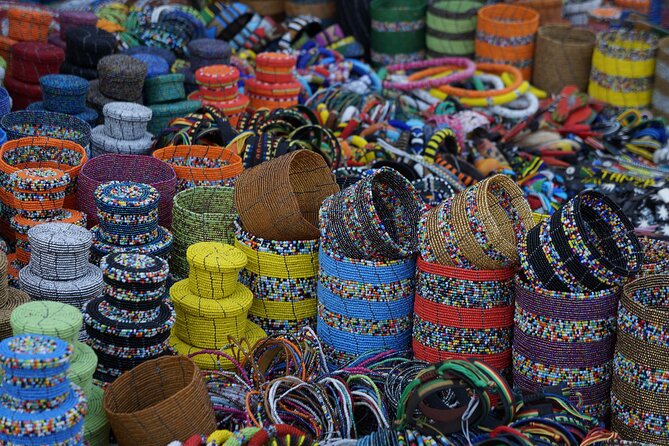
- City Market shopping help in a monumental 1930s building, with lots of choice for masks, paintings, garments, and food
- KICC rooftop 360 view plus the tower icon status and key independence era context
- A professional art historian guide who can explain both architecture and what to look for while you walk
Starting at Jevanjee Gardens, where Nairobi slows down
Your tour begins at Jevanjee Gardens on Monrovia Street. This is more than a convenient meetup point. It’s the first and only private property donated to the public by Abdullah Jeevanjee, and it plays a practical role in local daily rhythm by giving people a place to rest during lunch breaks.
There’s also a specific local rule that makes Jevanjee Gardens feel real. The gardens provide a public smoking zone, because it’s illegal to smoke just anywhere in Nairobi. That single detail helps you understand the city as a system, not just a string of landmarks.
If you’re worried about pacing, keep this in mind. The first stretch can include some standing and explanation before you start moving through the CBD, so it helps to wear shoes you can stand in comfortably.
More City Tours in Nairobi
- Nairobi City Walking Tour with Traditional Kenyan Lunch
★ 5.0 · 106 reviews - Nairobi Cultural and Historical City Tour with a Local
★ 5.0 · 67 reviews - Nairobi: City Site-Seeing Bus Tour
★ 4.5 · 35 reviews
Jamia Mosque on Banda Street, architecture with dates you can place
Next you head to Jamia Mosque on Banda Street, right in Nairobi’s central business district. This mosque is described as an important center of Islamic practice across East and Central Africa, and it’s also a heritage landmark in the middle of the city.
What I like here is that the guide can help you connect visual cues to real timelines. Jamia Mosque was founded by Syed Maulana Abdullah Shah in 1902, and construction ran from 1925 to 1933. When you know those dates, you can look at the building differently. Instead of just admiring it, you can start asking, what kind of community investment was happening then, and why this site mattered enough to become a regional reference point?
This is also a stop that works well for photos, as long as you follow basic on-site manners. Keep your camera respectful, pause when people are actively praying, and let your guide lead on what is appropriate.
City Market in a 1930s building, shopping you can actually enjoy
From the mosque you move to City Market, a monumental building from the 1930s. This is one of the best places to go when you want to buy souvenirs that look like they belong in Nairobi, not just in a tourist shop.
The market is organized into sections where you’ll see cultural souvenirs like masks, paintings, and garments. There are also meat selling sections, which means it’s not a staged craft hall. It feels like what it is, a working market serving daily needs.
Here’s the practical win: City Market is often where you can overpay if you don’t have help. The tour offers guidance to make shopping easier, especially if you’re not sure how to compare items or what kinds of products are typical. If you want to bring home something specific, this is the right moment to ask your guide for suggestions that fit your budget and the time you have.
Admission is listed as free, and the stop is around 20 minutes. That short window means you’ll need to decide quickly what you’re buying. If you’re a slow browser, say so early. A good guide will adjust so you don’t feel rushed, but you still cover the main sights.
Kenyatta International Conference Centre rooftop, the 360 moment
The final big feature is the Kenyatta International Conference Centre and its tower. Even if you’ve only seen pictures, this place has presence. It’s one of the first major buildings built after independence, and it’s known as an icon of Nairobi.
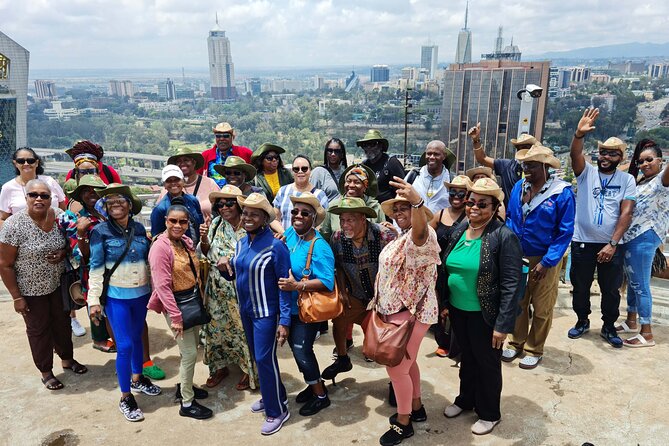
Your payoff is the rooftop experience. You get a chance to view Nairobi from above with a 360 aerial view, and the tower rooftop is the highlight that many people remember most clearly. Standing up there helps you make sense of the walk you just did. You can trace roads, spot the central grid, and understand how close different communities are when you look down instead of across street level.
There’s also a major statue element tied to the first President of Kenya. Your guide can point out what to look for and connect it to the city’s post-independence story and the role of this conference complex in welcoming the international community.
One important cost note: the entrance fee for KICC isn’t included. Plan a bit of extra spending money so you don’t feel stuck at the door.
Time-wise, the KICC stop is listed at about 2 hours in the itinerary window. That’s enough time to take photos, ask questions, and still not feel like you need to sprint through the tower.
More Walking Tours in Nairobi
- Nairobi: Historic and Modern Highlights Walking Tour
★ 4.8 · 703 reviews - Nairobi Downtown Walking Tour
★ 4.7 · 208 reviews - Nairobi Walking Tour: Downtown & City Tour
★ 4.8 · 32 reviews - Day tour to Hells Gate, Lake Naivasha and Crescent Island Walk
★ 5.0 · 26 reviews
Price and value: what $35 gets you in real terms
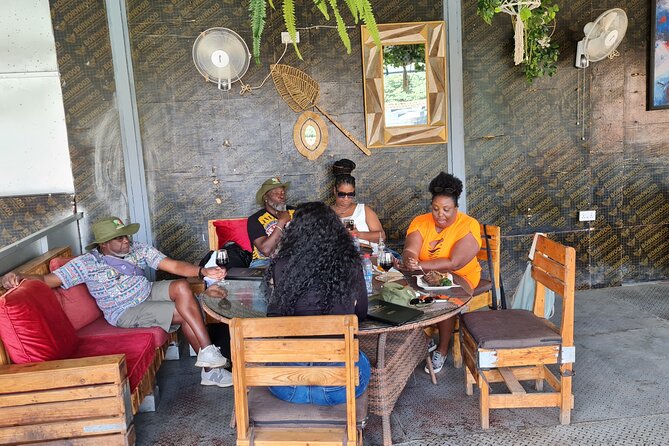
The tour costs $35.00 per person. It’s also noted that it’s booked about 21 days in advance, which usually signals this is a popular, reliable experience that people plan into shorter trips.
For the price, you’re not just buying a route. You’re paying for a private, guided walk with a guide described as a professional art historian. That combination matters because you’re seeing architecture and city design, not just streets. With this kind of guide, you’re more likely to understand why buildings look the way they do and what the city meant at different points in time.
You also get practical help shopping at City Market, which can be a value multiplier. If you buy one or two items you truly want, the tour can easily feel like it paid for itself compared to wandering alone with no plan.
Two cost items to watch for:
- KICC entrance fee is not included
- Extra site add-ons listed as not included, such as the National Archives and Railway Museum, would cost extra if your guide adds them into your available time
Finally, you’ll usually travel with a mobile ticket and benefit from group discounts if applicable. Since it’s private, you’re not sharing your guide with strangers, which often keeps the experience calmer and easier to follow.
How the walk feels: timing, pace, and what to wear

The tour length is listed as 2 to 5 hours. That range is normal for walking tours in a busy CBD. Your exact time will depend on how long you spend at each stop, how questions flow, and whether KICC timing or entrance lines affect your schedule.
You’ll also be walking outdoors, so think about comfort. Wear breathable layers if it’s warm, and bring a hat if the sun feels strong. Your guide can help you pace, but the route is still a walking experience.
One more practical note: the experience is described as near public transportation and most travelers can participate. Children must be accompanied by an adult, which you’ll likely already assume for a city walk in active areas.
For your footwear, choose something that works on sidewalks and curbs. Even if the distances aren’t huge, you’ll be on your feet enough that sore shoes can ruin the last stop, especially the rooftop time.
The guide factor: art historian context plus street-smart flexibility
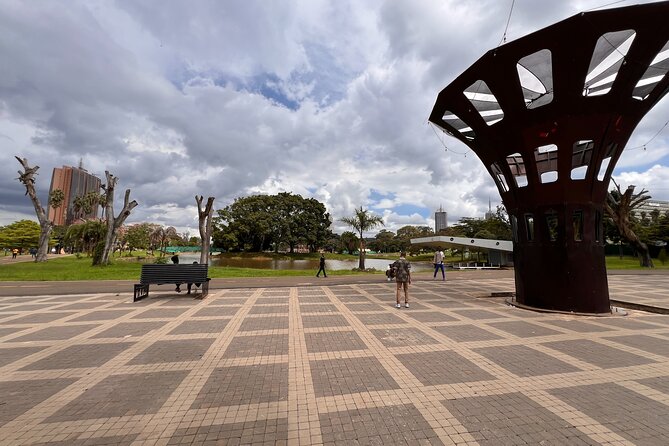
This tour is built around a single thing that drives quality: the guide. The tour description says you get a professional art historian guide, and the guide names that show up include Michael, Ezekiel, and Tim/Timothy.
What I look for in a CBD walking guide is not just facts, it’s the ability to connect dots fast. Here, that shows up when your guide explains why Jevanjee Gardens is important, why Jamia Mosque matters beyond its appearance, and why KICC is more than a tower for photos.
You also want a guide who can adapt. In real-world city conditions, delays happen, and it helps when your guide can keep the tour on track without cutting out the main highlights. From what’s been shared, these guides tend to be friendly, answer questions patiently, and keep the pace comfortable so you actually learn while still seeing everything.
If you prefer more moving time and less standing, tell your guide at the start. The Jevanjee Gardens briefing can take time, and it’s easier to adjust early than to fix it halfway.
What’s not included: souvenirs, food, and a few museum add-ons
You can plan your budget with the inclusions and exclusions in mind.
Not included:
- Food and drinks
- Souvenir photos, which are available to purchase
- KICC entrance fee
- Extra sites: Nairobi National Archives (3 USD), Nairobi Railway Museum (10 USD), and Nairobi Memorial Park (300 KSH)
This matters because you might see “extra potential” during the day. If you’re the type who likes to add one more cultural stop, you can ask your guide whether time allows. If your schedule is tight, keep it simple and focus on the core sights.
As for souvenirs, your guide can help you shop at City Market. But you’ll still pay for items yourself, like any market visit. The tour helps you decide, not replaces shopping with a checkout line.
Ending at KICC: turning city views into a better memory
Finishing at KICC is smart. You don’t end on a cramped indoor site. You end on height, light, and a panoramic view that makes the day feel connected.
Once you’re up there, you’ll notice how Nairobi’s central area concentrates major civic and religious sites. The mosque, the market, and the conference tower all sit inside a compact story. Looking down turns the walk into something you can explain to friends later.
It also gives you a breather if you’re visiting Nairobi on a shorter schedule. You can take photos, ask a final round of questions, and then wrap the day without rushing through one last street-level stop.
Who should book this tour, and who might want a different style
You should book if you want:
- A first-time Nairobi orientation that’s focused on the CBD
- A walking day that combines architecture, city rules, and everyday shopping
- A private guide experience, not a huge group herd
You might rethink if:
- You hate any standing time early in the tour, because Jevanjee Gardens can include a period of explanation before you move
- You’re trying to fit in too many extra museums. The essentials are strong, but add-ons cost extra
If you’re traveling solo, this still works well because the tour is private for your group. If you’re traveling as a couple, the private format keeps it intimate and calm while you shop and ask questions.
Also, if your priorities are beaches and wildlife only, this won’t replace a safari day. But if you want the Nairobi side of Kenya, this is exactly the kind of city grounding you’ll appreciate.
Should you book the Nairobi Historical Walking City Tour?
Yes, if you want a smart, low-stress way to understand Nairobi’s center. For $35 per person, you get a private walk with a professional art historian guide plus landmark stops like Jevanjee Gardens, Jamia Mosque, City Market, and the KICC rooftop.
Just plan for the practical extras, especially KICC entrance and any optional add-on sites you might want. If you show up with comfortable shoes and a budget for shopping, this tour is a strong use of a half day in Nairobi.
If your schedule is tight, you can also treat it like a “get oriented and shop smart” day, then build the rest of your itinerary around what you discover at the rooftop view.
FAQ
How much is the Nairobi Historical Walking City Tour?
It costs $35.00 per person.
How long is the tour?
The duration is listed as 2 to 5 hours (approximately).
Is this a private tour?
Yes. It’s described as a private tour/activity, and only your group will participate.
What are the main stops on the tour?
You’ll visit Jevanjee Gardens, Jamia Mosque, City Market, and the Kenyatta International Conference Centre (KICC).
Is the KICC entrance fee included?
No. The entrance fee for Kenyatta International Conference Centre is not included.
Are food and drinks included?
No. Food and drinks are not included.
Can I add other museums or sites to the tour?
The Nairobi National Archives, Nairobi Railway Museum, and Nairobi Memorial Park are listed as not included, with their costs given, so they would be extra if added.
Where does the tour start and end?
It starts at Jevanjee Gardens, 27 Monrovia St, Nairobi, Kenya. It ends at the Kenyatta International Convention Centre, City Square along Harambee Ave, Nairobi, Kenya.
What is the cancellation policy?
You can cancel for a full refund if you cancel up to 24 hours in advance of the experience start time. If you cancel less than 24 hours before, the amount paid is not refunded.
More Historical Tours in Nairobi
- Full Day Nairobi Cultural and Historical Tour
★ 5.0 · 153 reviews - Nairobi souvenir Shopping and Historical Half day Tour
★ 5.0 · 61 reviews - Nairobi History and Modern Culture 3 Hours Tour
★ 4.5 · 31 reviews - Half-Day Cultural Tour to Bomas of Kenya in Nairobi
★ 4.5 · 23 reviews
Newest write-ups from Nairobi
- Visit kibera Slum the chocolate city★ 4.8 · 3 reviews
- 3 days maasai mara migration safari★ 4.5 · 7 reviews
- 4 Days Tour Landcruiser in Masai Mara and Lake Nakuru★ 5.0 · 10 reviews
- 4 Days Safari to Lake Nakuru N/P and Maasai Mara N/R★ 5.0 · 18 reviews
- Day Tour to Nairobi national park, Elephants, and Giraffe Center★ 3.5 · 8 reviews
- Wildebeest Migration in Masai Mara and Sightseeing 4 Days Tour★ 4.5 · 6 reviews
- Maasai Mara Day Trip★ 5.0 · 15 reviews
- Kibera Slum Tour with a Local★ 5.0 · 15 reviews
Walking Tours, compared.


Walking Tour Through Old Town Mombasa and Fort Jesus
Read our review →
Nairobi Walking tour:Explore History Culture and Traditions
Read our review →

Nairobi City Walking Tour with Traditional Kenyan Lunch
Read our review →


Browse the lists this tour appears in