
REVIEW · CITY TOURS
Nairobi Cultural and Historical City Tour with a Local
One day in Nairobi, packed with meaning. This local-led cultural and historical route strings together National Museum and Bomas of Kenya so you see artifacts, city skyline, and living traditions in one run. It is a smart way to get your bearings fast while still learning something real about Kenya beyond the postcard stuff.
I like the structure because it mixes big stories with hands-on details. You start with standout museum displays like Ahmed the elephant, plus unusual ethnology pieces such as a Kalenjin cloak made from Sykes monkey skins, and even a mosaic map made from Kenya’s butterflies. Then you get to watch making up close at the KOBE TOUGH beads and leather stop, run with a strong community angle for women supporting their families.
One consideration: the day moves efficiently, with several stops timed at about 30 minutes, so if you want to linger and read every label, you might feel a bit rushed.
In This Review
- Key highlights worth planning around
- How the day is paced: 8 hours, private transport, and real stops
- National Museum on Museum Hill: Ahmed, monkey-skin cloaks, and butterfly maps
- KICC rooftop and Uhuru Park: city views plus pre-independence stories
- August 7th Memorial Park (optional): learning from 1998
- KOBE TOUGH beads and leather: a women-led craft factory you can watch
- Utamaduni Craft Centre in Karen/Langata: shopping in a converted Kikuyu house
- Bomas of Kenya: 30+ dances, homesteads, and warrior performances
- Price and value for $95: what you actually get
- Who this tour fits best, and who should adjust expectations
- Should you book this Nairobi cultural city tour?
- FAQ
- How long is the Nairobi Cultural and Historical City Tour with a Local?
- What is the price per person?
- What does the tour include?
- Is lunch included?
- Are tips included?
- Is this a private tour?
- Does weather affect the tour?
Key highlights worth planning around
- National Museum on Museum Hill with Kenya-focused cultural and natural displays
- KICC rooftop viewpoint for a 360-degree city-center view
- KOBE TOUGH beads and leather where you can see the process end to end
- Utamaduni Craft Centre in Karen/Langata inside a converted Kikuyu house with lots to browse
- Bomas of Kenya performances featuring 30+ dances and homestead-style cultural scenes
How the day is paced: 8 hours, private transport, and real stops
This is an 8-hour, one-day format that aims to cover Nairobi’s essentials without you spending your time figuring out logistics. Pickup and drop-off are included, and you ride in private transport with bottled drinking water, which matters in a city where traffic and distances can shape your whole day.
Even though it is private, the schedule still follows a “see the key sites, then connect the dots” logic. That is great if you have limited time and want a guided thread from colonial-era and national identity through to crafts and performances. It is less ideal if you want a slow, museum-style pace where you can take your time at one place for hours.
A good sign is that the tour includes multiple on-site admissions. You are not paying separately just to get through doors, which makes the $95 price feel more straightforward than tours that only cover the guide.
More City Tours in Nairobi
- Nairobi Historical Walking City Tour
★ 5.0 · 258 reviews - Nairobi City Walking Tour with Traditional Kenyan Lunch
★ 5.0 · 106 reviews - Nairobi: City Site-Seeing Bus Tour
★ 4.5 · 35 reviews
National Museum on Museum Hill: Ahmed, monkey-skin cloaks, and butterfly maps
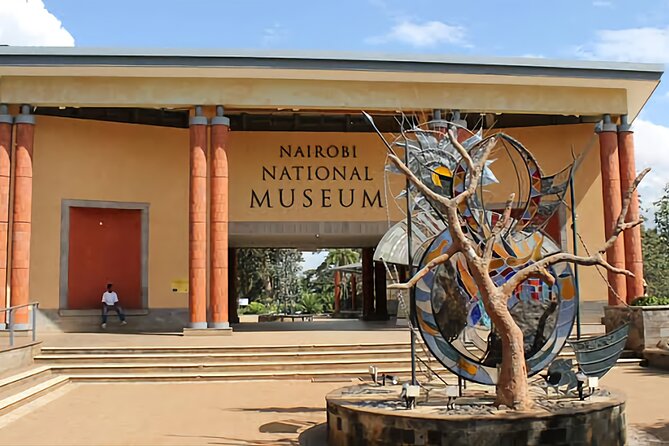
Your morning starts at Nairobi National Museum on Museum Hill, not far from the city center. This place is useful for first-time orientation because it gives you both cultural and natural heritage in one stop, which helps everything else you do later in the day make more sense.
The most talked-about object here is Ahmed, the massive elephant. He became a symbol during the height of the 1980s poaching crisis, and the museum explains that he was placed under 24-hour guard during that period. Seeing Ahmed in person gives a human weight to conservation and national identity that you do not get from a quick photo stop.
Beyond Ahmed, I love the ethnology details that are a little odd in the best way. One example is a Kalenjin cloak made from Sykes monkey skins, which is exactly the kind of material culture fact that makes a city tour feel grounded instead of generic. There is also a mosaic map of Kenya made from the country’s butterflies. That is a reminder that museum displays here are not only about what Kenya has, but also how people learn to represent and interpret it.
Time tip: you get about 2 hours here. That is usually enough to see the highlights without feeling like you have to sprint. If you are the type who reads every label, you will want to pick your “must-see” items before you walk in, then let the rest be a slow browse.
KICC rooftop and Uhuru Park: city views plus pre-independence stories
Next comes the Kenyatta International Conference Center, KICC, an iconic 28-storey building on Harambee Avenue. The main payoff is the rooftop viewpoint, which gives a 360-degree perspective over the city center and the horizons beyond.
This viewpoint is worth it because it gives you a sense of scale. Nairobi is not just one “type” of city. From up top you can see the mix of modern development and the roads leading toward different neighborhoods, and your guide can help you connect that geography with the story of the nation.
After the building, the route includes Uhuru Park for background on its historical significance to the Kenyan nation-state, and you then walk into the Central Business District while your guide shares real-time history of pre-independence Nairobi. Even if you have read a bit about Kenya, this walking context helps turn dates and headlines into something you can picture.
Time check: this whole segment is about 30 minutes on the schedule. That is short, so focus on getting the best view and letting your guide’s key points do the heavy lifting. If the wind is strong up at the rooftop, bring something that can cut glare and keep you comfortable.
August 7th Memorial Park (optional): learning from 1998
The August 7th Memorial Park stop is optional, and if you choose to add it, you are going to the bomb blast site tied to the former United States Embassy. The park is described as a symbol of peace and hope, and it includes a memorial museum that honors those who lost their lives during the August 7, 1998 attack.
This is not a “fun break” in the usual sightseeing sense. It is quieter, reflective, and the kind of stop that changes how you understand the country’s modern challenges and resilience. If you prefer strictly upbeat experiences, you might skip it and use that time for a longer shop stop or a slower lunch.
One practical note: admission for this park is not included. So if you add it, plan for some extra cost at the site.
More Historical Tours in Nairobi:
- Nairobi: Historic and Modern Highlights Walking Tour
★ 4.8 · 703 reviews - Full Day Nairobi Cultural and Historical Tour
★ 5.0 · 153 reviews - Nairobi souvenir Shopping and Historical Half day Tour
★ 5.0 · 61 reviews - Nairobi History and Modern Culture 3 Hours Tour
★ 4.5 · 31 reviews
KOBE TOUGH beads and leather: a women-led craft factory you can watch
This is one of the stops that feels especially meaningful because you see production, not just finished products. At KOBE TOUGH beads & leather, you are shown the stages from start to finish, which makes it easier to understand why some items are priced the way they are.
I also like the social structure behind the business. The center employs single parents from a poorer neighborhood, and it is designed to let them earn livelihoods to support their families. The women-led emphasis is not just branding here, because the tour explains how it grew after pandemic-era disruption at Kazuri beads, with staff who needed a reprieve to keep providing.
The stop is about 30 minutes, and it is free in terms of admission. That is a big value signal. Even if you do not buy anything, this is still a high return cultural and economic education stop because it connects craft to work and work to community support.
Shopping tip: if you want to buy confidently later at a craft center, pay attention now to how materials, coloring, and finishing show up in the final beadwork. You will spot better quality with less guessing.
Utamaduni Craft Centre in Karen/Langata: shopping in a converted Kikuyu house
After beads, you head to Utamaduni Craft Centre, a major craft shopping stop on the way to Nairobi’s Karen/Langata area. This neighborhood is known for views toward the Ngong Hills and for Karen Blixen’s original farm setting, so the drive itself can feel like a change from the city core.
Utamaduni is housed in a converted Kikuyu house with 18 shops. That matters because you are not just walking through one store, you are moving through a cluster of spaces, which makes browsing feel more like exploring than shopping with a deadline. You will find African crafts, antiques, and art, and the staff can help with packing or shipping if needed.
The stop includes about 1 hour of time and admission is free. That hour is also where you can slow down. Unlike the museum and viewpoint, this is a “choose your own pace” part of the day. If you want to pick up gifts, souvenirs, or small pieces of Kenyan craft, this is where you can do it without feeling like you have to rush.
A bonus that I think is underrated: there is a large garden restaurant where you can have refreshments. It is a good place to regroup, use restrooms, and cool down before the more performance-heavy final stop.
Bomas of Kenya: 30+ dances, homesteads, and warrior performances
The day ends at Bomas of Kenya, which is designed to preserve, maintain, and promote the cultural values of Kenya’s 53 ethnic communities. This is the biggest time block of the route at about 3 hours, and it is scheduled with both learning and performance.
The format is part show, part tour. You get traditional folklore dances and an informative session, and you also explore different homesteads to see real-life style cultural scenes. The performances include a selection of more than 30 dances from different ethnic groups.
One highlight that people consistently point to is the Samburu and Maasai warrior-style performances. Even if you have seen dance performances elsewhere in the world, this one tends to feel special because you are watching multiple styles and also hearing context around what you are seeing.
Time tip: arrive ready for stamina. Three hours sounds long, but it moves if you treat it like a mini cultural program. If you find performances tiring, take quick breaks between segments. Also, it helps to know that the show is the main event, so make sure you give yourself enough energy to stay engaged rather than trying to multitask on your phone the whole time.
Price and value for $95: what you actually get
At $95 per person, this tour lands in the “good value, not luxury” category, and the pricing structure supports that.
Here is what you get that directly affects value:
- Pickup and drop-off at your hotel or residence
- Private transport plus bottled drinking water
- Admissions included at Nairobi National Museum
- Admissions included at KICC
- Admissions included at Bomas of Kenya
- A planned route with timed stops, so you are not paying a guide and then wasting time figuring out logistics
What is not included:
- Lunch, which you can purchase
- Tips and gratuities
- Optional August 7th Memorial Park admission
So you are paying mostly for the guided experience plus transport plus several entrance fees. That is why the price can make sense if you would otherwise pay for museum and show tickets on your own, and if you want a local explanation rather than just reading signs.
One more value angle: this is scheduled as a one-day sampler. If Nairobi is a short stop for you, it can save you the stress of planning and help you choose what to revisit later.
Who this tour fits best, and who should adjust expectations
This tour is a strong match if you want a guided overview of Nairobi’s cultural and national identity without building your own itinerary from scratch. It is also a good fit if you enjoy crafts, because you get both production at KOBE TOUGH and browsing at Utamaduni.
It is less ideal if you hate structured timing. Because several stops are about 30 minutes, you will need to focus on highlights instead of trying to read every detail slowly. Also, if you are expecting only “museum-style” depth at every stop, the day includes performance and shopping time, so the tone is mixed by design.
The guide experience can shape the day a lot. In this tour’s real-world operation, guides such as Kelvin and Faith have been highlighted for being prompt and explaining cultural aspects clearly, while Denish and Dannis also show up by name for attentive driving and thoughtful guidance. Even if your guide is different, the key is that the route works best when they are helping you connect the museum objects, city-view context, and dance performances into one story.
Should you book this Nairobi cultural city tour?
Book it if:
- You want an organized Nairobi introduction with museum, viewpoint, crafts, and performances in one day
- You care about conservation context like Ahmed’s story, and you want to see crafts connected to real work
- You prefer private transport and included admissions so you can focus on the sites
Skip it or adjust it if:
- You want long, slow time in museums and you do not like a packed schedule
- You are only interested in one theme, because this day mixes history, crafts, city views, and performances
- You do not want optional added costs at the August 7th Memorial Park
If you land in Nairobi with limited time, this is the kind of day that can give you a meaningful backbone. Not perfect for everyone, but a solid choice for many first-timers.
FAQ
How long is the Nairobi Cultural and Historical City Tour with a Local?
The tour runs for about 8 hours.
What is the price per person?
The price is $95.00 per person.
What does the tour include?
Pickup and drop-off at your hotel or residence, private transport with bottled drinking water, and admissions for Nairobi National Museum, KICC, and Bomas of Kenya.
Is lunch included?
No. Lunch is available for purchase.
Are tips included?
No. Tips and gratuities are not included.
Is this a private tour?
Yes. Only your group participates.
Does weather affect the tour?
Yes. The experience requires good weather. If it is canceled due to poor weather, you are offered a different date or a full refund.
Newest write-ups from Nairobi
- Visit kibera Slum the chocolate city★ 4.8 · 3 reviews
- 3 days maasai mara migration safari★ 4.5 · 7 reviews
- 4 Days Tour Landcruiser in Masai Mara and Lake Nakuru★ 5.0 · 10 reviews
- 4 Days Safari to Lake Nakuru N/P and Maasai Mara N/R★ 5.0 · 18 reviews
- Day Tour to Nairobi national park, Elephants, and Giraffe Center★ 3.5 · 8 reviews
- Wildebeest Migration in Masai Mara and Sightseeing 4 Days Tour★ 4.5 · 6 reviews
- Maasai Mara Day Trip★ 5.0 · 15 reviews
- Kibera Slum Tour with a Local★ 5.0 · 15 reviews
City Tours, compared.


Tusks, Fort Jesus, Old Town, Beach and City Tour
Read our review →
Nairobi City Walking Tour with Traditional Kenyan Lunch
Read our review →

Private City Tour with Fort Jesus & Haller Park
Read our review →
Browse the lists this tour appears in