

REVIEW · KIBERA TOURS
Kevins Kibera Slum Tours
Kibera turns Nairobi into something real. This private half-day tour with Kevin’s Kibera Slum Tours brings you face-to-face with daily life in Africa’s largest urban informal settlement, guided by Kevin and often his brother Ismael. I especially like the front-door hotel pickup (it cuts stress fast) and the chance to see parts of community life firsthand, including a family-home visit.
One thing to plan for: the walking can be rough. Reviews point to uneven, treacherous ground, and it is not a good match if you have balance issues or limited mobility.
In This Review
- Key things that make this Kibera tour special
- A Half-Day Reality Check in Kibera (Without Pretending It’s Simple)
- Kevin and Ismael: The Guides Who Turn Questions Into Answers
- How the 8:00 am Timing and 4-Hour Window Actually Play Out
- Stop One in Kibera: Bone Craft, Education Spaces, and a Family Home
- Landfill Edges, Train Tracks, and the Main Street Market
- Safety: What You Need to Know Before You Step In
- What to Wear and Bring to Make the Day Work
- Price and Value: Is $65 Worth It?
- Who This Tour Suits Best (and Who Should Skip)
- Should You Book Kevins Kibera Slum Tours?
- FAQ
- What time does the Kibera tour start?
- How long is the tour?
- Does the tour include hotel pickup and drop-off?
- What’s included in the price, and what’s not?
- Is this tour private?
- What happens if weather is bad or I need to cancel?
Key things that make this Kibera tour special

- A guide with deep local ties: Kevin and Ismael grow up in Kibera, so the day feels explained by people who live the place.
- Family-home access: you may visit the guide’s family home, giving you a real sense of how learning, living, and daily errands fit together.
- School and orphanage stop: you’ll spend time around education-focused spaces, where hope and hard reality show up side by side.
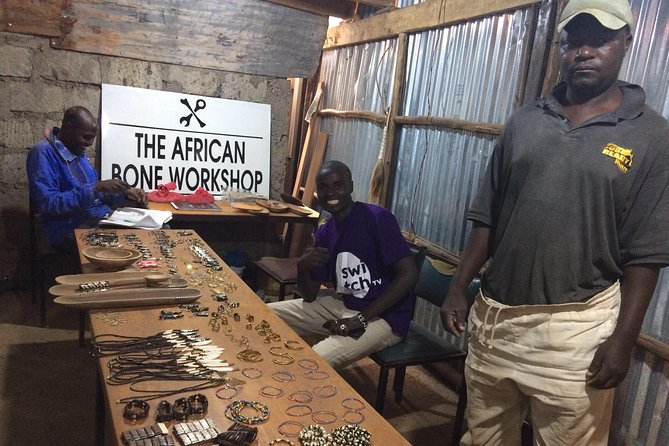
- Hands-on local work: you’ll pass through a bone-craft workshop, including cow-bone jewelry making, where practical skills matter.
- Route includes everyday places: from the main street market to train-track areas and landfill surroundings, you get more than a single landmark.
A Half-Day Reality Check in Kibera (Without Pretending It’s Simple)

Kibera is not a theme park, and this tour does not act like it is. You are going into a neighborhood where people work hard, raise kids, and solve problems with community support, even when services are limited. That context is exactly why this experience sticks in your mind.
I like that the route is built around daily life, not just dramatic viewpoints. You are looking at craft work, education spaces, and regular streets where residents study and trade. The day helps you connect the dots between what you see in Nairobi from the outside and what life looks like at street level.
You should also be ready for emotions. It is inspiring in places, frustrating in others, and sometimes both in the same moment. If that sounds like a mood whiplash, good, you’re paying attention.
More Kibera Tours in Nairobi:
- Nairobi: Explore Kibera Slum with Local Guides
★ 4.9 · 365 reviews - Nairobi: Kibera Slum storytelling tour with a Local
★ 5.0 · 185 reviews - Kibera Slum Tour with Lucas
★ 5.0 · 119 reviews
Kevin and Ismael: The Guides Who Turn Questions Into Answers
This tour works because your guide is not “passing through.” Kevin’s Kibera Slum Tours pairs you with a Kibera local guide, and in the experiences described, Kevin and Ismael are repeatedly mentioned as the people leading the day. That matters because the questions you naturally have get answered in a grounded way.
From the way the day is described, guides do more than point. They explain what you’re seeing and why it matters. You also get a sense that the community knows them, which helps you feel more settled while walking through tight paths and uneven ground.
The best part is the human side. Multiple accounts highlight hospitality during home visits, including light conversation and normal family life. That does not erase the hardship, but it keeps your perspective honest. You are meeting people, not just “viewing poverty.”
How the 8:00 am Timing and 4-Hour Window Actually Play Out
The tour starts at 8:00 am and runs about 4 hours. The on-the-ground portion is roughly 3 hours, which means you will see several key stops without it turning into an all-day ordeal. That timing is a practical sweet spot in Nairobi, where heat and traffic can mess with your plans.
Hotel pickup and drop-off are included from anywhere in the city, which is a big deal for value. You do not have to negotiate rides, find a meeting point in a maze of streets, or add extra time to your itinerary.
You’ll also use a mobile ticket, and confirmation happens at booking. One small scheduling note: some accounts mention pickup can be later than expected by about an hour. So I’d treat the start time as a target, not a guaranteed clock, and plan buffer time around it.
Stop One in Kibera: Bone Craft, Education Spaces, and a Family Home

This is where the tour becomes more than sightseeing. You’ll spend time in Kibera and move through a sequence of stops designed to show daily anchors in the community.
First up is a bone workshop area, where craft work is connected to real income opportunities. In the descriptions, this includes cow-bone jewelry making. I like this stop because it shows skill, not just survival. You see how people turn local materials into products that can be sold.
Next comes an orphanage school stop. You might spend time around children and educational activity, which naturally brings up questions about safety, stability, and support. Several accounts also mention you may see cave-like dwellings for orphans as part of the broader context. I’d handle this emotionally by remembering: the point is to understand the full environment around learning, not just take a quick look and move on.
Then you may visit Kevin’s house and family. This is one of the most praised parts of the day, and for good reason. It helps you understand where residents study, shop, and live, because you’re not only watching from the sidewalk. If you tend to get shy, don’t overthink it. Your guide sets the tone, and the interaction is described as warm and respectful.
A few more Nairobi days worth pricing up
- Nairobi National Park Half-Day Tour; Free Wi-Fi connection
★ 5.0 · 878 reviews - Nairobi: National Park & Optional Elephants & Giraffe Center
★ 4.8 · 874 reviews - NAI NAMI: Nairobi Storytelling Tour with Street Children
★ 5.0 · 792 reviews - Nairobi National Park Half-Day Game Drive
★ 4.5 · 738 reviews
Landfill Edges, Train Tracks, and the Main Street Market

The rest of the route keeps you grounded in ordinary movement through Kibera.
You may walk past a landfill area and also along or near train-track surroundings. These stops are uncomfortable to process, because they show how infrastructure gaps shape where people build, walk, and live. It can feel harsh, but that is also the point of seeing the neighborhood with a local guide instead of relying on assumptions.
Finally, you’ll reach the main street market. This part is easier to breathe through because you see daily commerce in motion. It’s where shopping, small trades, and neighborhood energy show up in plain view. More than one account highlights the friendliness of the people you meet in these everyday spaces, which helps balance out the heavier moments earlier on.
If you’re building a mental picture of Kibera, this sequence helps. Craft work and education show the future-oriented side. Markets and streets show the present. Landfill and tracks show the systems underneath it all.
Safety: What You Need to Know Before You Step In
Safety is a common question with Kibera tours, and the information here is fairly consistent from the accounts you provided. Many describe feeling safe throughout the walk, largely because they were with a guide who is known in the community.
That said, safety does not mean easy walking. The route can be treacherous, and there are uneven surfaces and hazards that you might not spot until you’re stepping. A few accounts explicitly warn that elderly travelers or anyone with balance or walking issues should not book.
So here’s my practical take: treat this as a guided city-walk with off-road footing, not a stroll. If you’re comfortable walking on rough, dirty, uneven ground, you’ll likely handle it. If not, save this for when you can do the physical part comfortably.
What to Wear and Bring to Make the Day Work

Plan your outfit like you’re going to earn it.
Wear close-toed shoes you don’t mind getting dirty. That advice comes up again and again, because you are walking through uneven and sometimes muddy or dusty areas. Closed shoes protect your feet and give you traction on surfaces that may not be kind.
Bring clothing that lets you move. The walking can involve careful steps, and you might need to adjust to tight paths and changing ground conditions. If you are traveling with kids, it can still work, but pace matters. You want a schedule that can slow down when your guide pauses to explain something.
Food and drinks are not included. If you’ll be far from a place to grab a snack after pickup, it’s smart to plan water and simple snacks on your own.
Also, this experience requires good weather. If conditions are bad, it can be canceled and you should be offered a different date or a full refund. With that in mind, avoid booking this as your “only morning option” unless you have a flexible backup plan.
Price and Value: Is $65 Worth It?

At $65 per person for a private half-day, the value hinges on one thing: what you get beyond photos.
You’re paying for a local guide, private format, and hotel pickup and drop-off. That combination can save you time and hassle, especially in Nairobi where transport can be unpredictable. You’re also paying for access to places you probably could not arrange on your own, like a family home visit and education-focused stops.
Admission is described as ticket-free for the main part of the experience, which helps keep the budget straightforward. What’s not included is food and drinks, so you still need to account for that small personal cost.
Is it “cheap”? No. But it’s also not priced like a luxury tour. For many visitors, the emotional impact and the depth of explanation are what make the price feel justified. If you’re the kind of traveler who wants context, community life, and real conversations, $65 is easier to defend.
Who This Tour Suits Best (and Who Should Skip)
This tour fits well if you:
- Want a Nairobi experience that goes beyond wildlife and big-city landmarks
- Prefer being guided by someone who lives in the area
- Are curious about how education, work, and daily routines connect
It may not suit you if:
- You have mobility limitations or balance issues, because uneven footing is part of the day
- You need a very comfortable pace, because you will be walking through real neighborhood terrain
- You get overwhelmed easily by harsh living conditions, even though the day can also feel hopeful
One more match factor: if you travel with children, a few accounts describe it as meaningful for families. Still, keep expectations realistic. This is not a kids-only show. It’s a human neighborhood walk with educational stops.
Should You Book Kevins Kibera Slum Tours?
I’d recommend booking if you want a Nairobi “must-do” that trades quick sightseeing for context and conversation. The tour’s strongest selling points are the local guidance from Kevin and Ismael, the family-home access, and the mix of education, work, and everyday places like the main street market. It is also described as respectful and safe when you stay with your guide.
I would not book if you cannot handle uneven, potentially slippery walking surfaces, or if you’re traveling with someone who struggles with mobility. In that case, the wrong physical setup can turn a meaningful day into a stressful one.
If you do book, go in with the right mindset. Bring closed-toe shoes, plan for light walking discomfort, and give your guide space to set expectations. You’ll likely come away with a bigger, more human understanding of Kibera and Nairobi’s wider story.
FAQ
What time does the Kibera tour start?
The tour starts at 8:00 am.
How long is the tour?
It’s about 4 hours total, with around 3 hours spent in Kibera.
Does the tour include hotel pickup and drop-off?
Yes. Front-door pickup and drop-off are included from hotel accommodation in the city.
What’s included in the price, and what’s not?
The tour includes a Kibera guide and the experience includes admission ticket free for the main stop. Food and drinks are not included.
Is this tour private?
Yes. It is a private tour/activity, and only your group participates.
What happens if weather is bad or I need to cancel?
This experience requires good weather. If it’s canceled due to poor weather, you’ll be offered a different date or a full refund. You can also cancel for a full refund up to 24 hours in advance of the experience start time.
Newest write-ups from Nairobi
- Visit kibera Slum the chocolate city★ 4.8 · 3 reviews
- 3 days maasai mara migration safari★ 4.5 · 7 reviews
- 4 Days Tour Landcruiser in Masai Mara and Lake Nakuru★ 5.0 · 10 reviews
- 4 Days Safari to Lake Nakuru N/P and Maasai Mara N/R★ 5.0 · 18 reviews
- Day Tour to Nairobi national park, Elephants, and Giraffe Center★ 3.5 · 8 reviews
- Wildebeest Migration in Masai Mara and Sightseeing 4 Days Tour★ 4.5 · 6 reviews
- Maasai Mara Day Trip★ 5.0 · 15 reviews
- Kibera Slum Tour with a Local★ 5.0 · 15 reviews
Kibera Tours, compared.




Kibera Slum Tour with Local Social Entrepreneurs
Read our review →



Browse the lists this tour appears in