

REVIEW · KIBERA TOURS
Nairobi: Visit Kibera Slum with a Social Entrepreneur
Kibera is not a postcard, it is real life. What I like most is that you are guided by people who are born and raised in Kibera, so the story is grounded in daily routine, not script. I also love the accountability built into the visit, since 50% of the booking fees supports school fees and other programs for orphans and vulnerable children through the local work connected to KCOOP.
There is one important consideration: this is an emotionally serious experience. If you are looking for light entertainment, you may feel uneasy. Go in with a respectful mindset, plus comfortable shoes and a bit of patience.
In This Review
- Key things to know before you go
- Kibera with a social entrepreneur, not a sightseeing detour
- Where you meet, and how you transition into Kibera
- Stop 1: the office briefing, Wi-Fi included
- Stop 2: a home visit that explains everyday infrastructure
- Stop 3: handicrafts built from recycling
- Stop 4: KCOOP Children’s Centre and why education support matters
- Stop 5: OAC Kenya Crafts, fixed prices, no bargaining
- Meet your guides: Erick, Samuel, Benta, and Jack
- Price and value: what your $16 fee really buys
- Practical prep that makes the 3 hours easier
- Safety, respect, and how to behave on a home visit
- Who should book this tour, and who should skip it
- Should you book this Kibera slum tour with OAC Kenya Tours?
- FAQ
- How long is the Kibera visit experience?
- What is the meeting point for the tour?
- Is the tour guided in English?
- What is included in the price?
- How much does it cost?
- What should I bring with me?
- Is it suitable for wheelchair users or people with mobility impairments?
Key things to know before you go

- Local Kibera guides who still live in the community and explain how everyday life works
- A home visit focused on practical details like water, electricity, and bathroom setup
- KCOOP Children’s Centre, run by the organization connected to the tour and its school support
- OAC Kenya Crafts shopping with fixed prices, where bargaining is not part of the deal
- A clear funding pathway, with half of your fee directed back to the community
Kibera with a social entrepreneur, not a sightseeing detour

This is a Nairobi tour that trades typical “see and move on” sightseeing for a focused, human scale visit to Kibera, Africa’s largest slum. It is organized as a social impact route, led by a local social entrepreneur and nonprofit founder, with a direct link between your visit and support for kids in need.
For me, the best part is the structure. You are not dumped into a neighborhood with vague instructions. Instead, you move through a set of meaningful stops, each one tied to a real part of life in Kibera, from infrastructure in a home to education support at the children’s centre to work and income generation through crafts.
Also, the guides are not generic “tour staff.” The tour is run by a team of Erick, Samuel, Benta, and Jack, all of whom are born, raised, and still live in Kibera. That matters because it changes how information lands. You get context, not just facts.
More Kibera Tours in Nairobi:
- Nairobi: Explore Kibera Slum with Local Guides
★ 4.9 · 365 reviews - Kevins Kibera Slum Tours
★ 5.0 · 213 reviews - Nairobi: Kibera Slum storytelling tour with a Local
★ 5.0 · 185 reviews
Where you meet, and how you transition into Kibera
You start at PRESTIGE PLAZA SHOPPING MALL on Ngong Road, in front of JAVA HOUSE. It is a clear, easy-to-find meeting point, and you will know exactly where to wait.
After you meet, you take a taxi to the first stop inside the community. That short transfer matters for two reasons. First, it helps you arrive without wandering around unfamiliar streets. Second, it sets expectations: this is not a long walk-through under your own navigation.
You should plan on about 3 hours, with the option to make it longer or shorter depending on your interest. That flexibility is useful if you want more time at the centre or if you prefer to keep the pace steady.
Stop 1: the office briefing, Wi-Fi included

The first stop is the tour office, where your guides welcome you and give a briefing about how the experience will work. This is more than a formality. It helps you understand what you are about to see and how to behave.
You are also told about the bigger purpose of the tour. The income generated from the booking fees supports school fees for orphans and vulnerable kids, along with funding for other social projects in Kibera. So even before you step into homes or meet children, you know what the visit connects to.
A small practical plus: the office has free Wi-Fi, so you can settle in, check messages, or plan your next Nairobi step.
Stop 2: a home visit that explains everyday infrastructure
The heart of this tour is the home visit. This is the main stop, and it is designed to show how people live, right down to the “ordinary” systems many tourists never think about.
Inside a residential house in Kibera, you will learn about practical things like:
- how people get water
- how electricity works day to day
- what the bathroom system looks like
- and what a typical house size feels like
This is where the tour can hit hardest. Not because it is staged, but because you are confronting the gap between what you may consider normal and what is actually available. The right approach is curiosity with respect. Ask questions, but keep it kind, since you are stepping into someone’s home, not a museum exhibit.
What I appreciate is that the home visit is about understanding, not gawking. When you are taken through details like water and sanitation setup, you begin to see why daily life requires adaptation, community support, and steady investment in education.
A few more Nairobi days worth pricing up
- Nairobi National Park Half-Day Tour; Free Wi-Fi connection
★ 5.0 · 878 reviews - Nairobi: National Park & Optional Elephants & Giraffe Center
★ 4.8 · 874 reviews - NAI NAMI: Nairobi Storytelling Tour with Street Children
★ 5.0 · 792 reviews - Nairobi National Park Half-Day Game Drive
★ 4.5 · 738 reviews
Stop 3: handicrafts built from recycling

Next up is the handicrafts centre, where you see how locals recycle materials to make jewelry and other handmade items. This stop does two jobs.
First, it shows how creativity becomes income, even when resources are limited. Second, it sets you up for the later craft shopping, where you will understand that the products are not random souvenirs. They reflect work, skill, and a supply chain tied to the neighborhood economy.
A practical tip here: if you plan to buy, pay attention to what you see being made. The tour’s craft stop later is not about pressure. It is about transparency, so you can make decisions with your eyes open.
Stop 4: KCOOP Children’s Centre and why education support matters
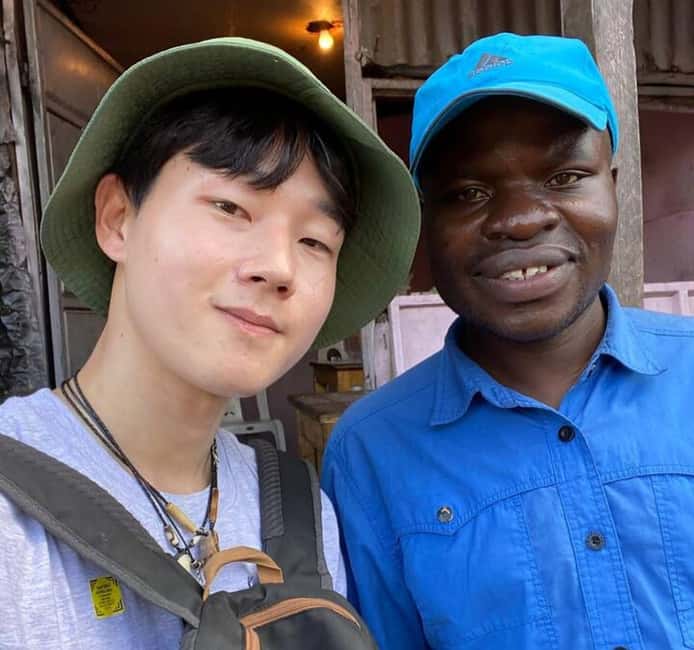
The KCOOP Children’s Centre is one of the most important stops, because it is where the tour’s social impact becomes concrete.
You visit the centre that runs programs serving orphans and vulnerable children. The organization behind KCOOP is connected to the tour and is registered as a nonprofit. The stated program areas include:
- After school program
- Education program
- Combating child hunger
- Empowerment through arts and sports
- Community outreach
Even if you do not have a background in development work, you can understand the logic quickly. Education is not just about school buildings. It is about keeping kids supported when life outside school is hard. If a child is facing hunger, lack of resources, or unstable family support, school can become fragile. That is why the tour repeatedly links booking income to school fees and broader program funding.
This is also where you get a sense of community energy. The tone may be emotional, but it is not only sorrow. The centre visit is built around the reality that children show up with smiles and interaction when they are given support and routines.
Stop 5: OAC Kenya Crafts, fixed prices, no bargaining
Shopping in Kibera can sound like a potential headache. Here, it is handled in a straightforward way at a curio shop called OAC Kenya Crafts.
What you can expect:
- Handmade African crafts and souvenirs
- Prices that are fair, regular, and transparent
- Fixed prices clearly marked with tags
- No bargaining
That last point is a big deal if you hate awkward pricing negotiations. You can browse at a human pace, compare items, and decide what is worth your money without playing pricing games.
Also, OAC Kenya Crafts is not just a shop with cute products. It is described as a social enterprise set up to create economic opportunities for local artisans, and it is connected to supporting needy kids in Kibera. In other words, your souvenir spending ties into the same “help the neighborhood” theme, even if it is not the exact same mechanism as the school-fee funding.
If you want to buy souvenirs, the tour suggests bringing cash (optional, of course). You do not need to make purchases to benefit from the visit, but the shop stop is built into the experience, so plan time for it.
Meet your guides: Erick, Samuel, Benta, and Jack

The tour is led by a local team of guides: Erick, Samuel, Benta, and Jack. The big advantage of having guides who live there is that they can answer the tough, specific questions. How do people manage water? How does daily routine work? What do crafts take time to produce? What changes over the year?
In the reviews connected to this experience, you can see the pattern people respond to: guests consistently describe the guides as informed, organized, and safety-conscious. That safety feeling is not about promising a “perfect” environment. It is about having people around you who know where you are, what is appropriate, and how to keep the group moving with care.
You should also expect a mix of education and emotion. One guide described as Benta has been credited with introducing the slum and accompanying guests around, creating that guided sense of “I know what is happening next.”
Price and value: what your $16 fee really buys

The listed price is $16 per group (up to 1). That wording can be confusing if you are comparing Nairobi tours, so focus on value instead of the label.
Here’s the value math that matters:
- You get an expert guide
- The experience is structured into multiple stops, including a home visit and the children’s centre
- You also get crafts shopping at a shop with fixed, clearly marked prices
- Most importantly, 50% of the booking fees goes back to the community for supporting kids in need, with stated school-fee support for orphans and vulnerable children
So even though $16 may look small compared to some formal tours, the model is different. You are paying for access and interpretation, plus a direct funding link. That is why this tour is best seen as a visit with an impact channel, not a standard “guided walk.”
If you are the type who wants your spending to do real work, this is the kind of tour where the money trail is part of the experience.
Practical prep that makes the 3 hours easier
The tour comes with a simple packing list, and I agree with it. Comfortable shoes matter because you will be moving between several stops. Sunscreen and water help because you may spend time outdoors around the community.
Bring:
- Comfortable shoes
- Sunscreen
- Water
- Hand sanitizer or tissues
Language is English, so you can ask questions without needing translation.
One optional add-on that many visitors like: gifts for the children. You can bring items like candies, biscuits, snacks, school supplies, used clothes, sports supplies, art supplies, indoor games, or food supplies like rice and sugar. The tour notes gifts are optional, so you can travel light and still do the tour.
And if you plan to buy souvenirs, bring cash for the crafts shop.
Safety, respect, and how to behave on a home visit
Let’s be honest. Visiting a slum can bring up nerves. The good news is that the experience is organized with structure, local leadership, and a short, planned route. Reviews connected to this tour describe a strong sense of safety with guides who know what they are doing.
You can also help the day go smoothly by using simple etiquette:
- Ask questions politely, and keep them grounded in learning rather than curiosity for curiosity’s sake
- Follow your guide’s direction about where to stand and how to move
- Keep your pace steady and your group together
- Remember this is someone’s real home, not a staged photo set
If you approach it with patience and respect, you will likely find that the warmth and welcoming energy are part of the experience, not an afterthought.
Who should book this tour, and who should skip it
This tour is a strong fit if you want:
- a guided introduction to Kibera from people who live there
- a home visit that focuses on practical daily-life systems
- a clear link between your money and kids’ school support
- a crafts stop with fixed prices and no bargaining pressure
It is not suitable for people with mobility impairments, and it is not for wheelchair users. So if accessibility is a major concern for you or your travel group, you should choose a different kind of Nairobi experience.
And if you are looking for a casual, lighthearted outing, expect the emotional weight. The tour includes a mix of serious context and human warmth, but it is still about hardship and resilience.
Should you book this Kibera slum tour with OAC Kenya Tours?
I think you should book if you want an honest, structured look at Kibera with local guidance and a funding model that sends money back to education support. The big reasons are the local guides who live in the community, the home visit focused on real daily infrastructure, and the KCOOP children’s centre stop tied to education programs and school-fee support. Add the OAC Kenya Crafts shop with fixed prices and no bargaining, and you get a day that is both meaningful and practical.
Skip it if you need a fully relaxing sightseeing day or if mobility constraints make the route difficult. If you are flexible, open-minded, and respectful, this is exactly the kind of Nairobi experience that feels grounded in reality rather than tourism theater.
FAQ
How long is the Kibera visit experience?
The tour takes about 3 hours. You can make it longer or shorter depending on your interest.
What is the meeting point for the tour?
Meet at PRESTIGE PLAZA SHOPPING MALL on Ngong Road, in front of the JAVA HOUSE. The tour ends back at the same meeting point.
Is the tour guided in English?
Yes. The tour is listed as available in English.
What is included in the price?
The experience includes an expert guide.
How much does it cost?
The price is listed as $16 per group up to 1.
What should I bring with me?
Bring comfortable shoes, sunscreen, water, and hand sanitizer or tissues. Gifts and extra cash for souvenirs are optional.
Is it suitable for wheelchair users or people with mobility impairments?
No. The tour is not suitable for wheelchair users and people with mobility impairments.
Newest write-ups from Nairobi
- Visit kibera Slum the chocolate city★ 4.8 · 3 reviews
- 3 days maasai mara migration safari★ 4.5 · 7 reviews
- 4 Days Tour Landcruiser in Masai Mara and Lake Nakuru★ 5.0 · 10 reviews
- 4 Days Safari to Lake Nakuru N/P and Maasai Mara N/R★ 5.0 · 18 reviews
- Wildebeest Migration in Masai Mara and Sightseeing 4 Days Tour★ 4.5 · 6 reviews
- Maasai Mara Day Trip★ 5.0 · 15 reviews
- Day Tour to Nairobi national park, Elephants, and Giraffe Center★ 3.5 · 8 reviews
- Kibera Slum Tour with a Local★ 5.0 · 15 reviews
Kibera Tours, compared.





Kibera Slum Tour with Local Social Entrepreneurs
Read our review →


Browse the lists this tour appears in