

REVIEW · KIBERA TOURS
Nairobi: Kibera Street Art Tour with Local Artists
Kibera street art has stories you can’t Google. This walking tour (run by the Sun Valley Art Collective) is built around murals, paintings, and urban art told through the eyes of artists who grew up in Kibera. You’ll also learn how the community uses creativity for education, healthcare, sports, and youth programs.
What I like most is the access to real art context, not just photos.
A heads-up: this is a lived-in neighborhood walk. You’ll be around daily life, and there are limits around when and how photos are taken, plus it is not suitable for mobility impairments.
The second big win is the hands-on feel. You get to visit artists, art collectives, and even studio spaces linked to Sun Valley, then stop at street vendors for small samples along the way. I also like that the tour makes it easy to buy work straight from the creators, so your money stays close to the source.
One possible drawback to consider is pacing: you’re on your feet for about two to three hours, and the route includes multiple stops and walks between them.
Finally, the guides set the tone with respect and honesty. In particular, names like Saviour, Tony, Anton, and Anthony show up as friendly ambassadors of Kibera through the Sun Valley Collective, with clear explanations of what the murals mean and how they connect to everyday life. If you want street art plus real community context, this format works. If you’re looking for a quick, low-effort checklist tour, you might find it a bit more personal and slow-moving than you expected.
In This Review
- Key Things That Make This Kibera Street Art Tour Worth Your Time
- Where It Starts: Gateway Supermarket and the Walk Into Kibera
- The Sun Valley Guides: Saviour, Tony, Anton, and Anthony as Art Ambassadors
- Stop One: The Kibera Slum Walk and the Murals That Do the Talking
- Hidden-Visit Style Stop: A 30-Minute Detour With Extra Context
- Street Food Stops: Small Samples, Big Local Understanding
- Studio and Art Collective Visits: Where the Art Comes From
- Buying Art Directly From Artists: How This Tour Adds Real Value
- Finishing Near Olympic Stage, Wrapping Up at HOF Gallery Kibera
- What to Bring for a Comfortable, Respectful Walk
- Price and Value: Is $45 a Fair Deal for Two to Three Hours?
- Who This Tour Fits Best (and Who Might Want Something Else)
- Should You Book This Kibera Street Art Tour?
- FAQ
- Where is the meeting point for the Kibera street art tour?
- How long does the tour take?
- What does the tour include besides walking and art viewing?
- Can I buy artwork during the tour?
- What languages are the tours offered in?
- Is it okay to take photos?
- Where does the tour finish?
- Is the tour suitable for wheelchair users or mobility impairments?
Key Things That Make This Kibera Street Art Tour Worth Your Time

- Sun Valley Art Collective on the route: the team includes around 15 artists who grew up in Kibera, so the art has lived context
- Stories behind murals, not just the art: you learn the meaning, motivations, and social side of the work
- Studio and collective visits: you’re not limited to sidewalk viewing, you get inside connected spaces
- Street food snacks along the way: small samples at favorite street vendors add local flavor
- Buy directly from artists: you can take home work made by the people telling the story
- Small-group comfort: the guide-to-guest ratio is set at about one guide for every two guests
Where It Starts: Gateway Supermarket and the Walk Into Kibera
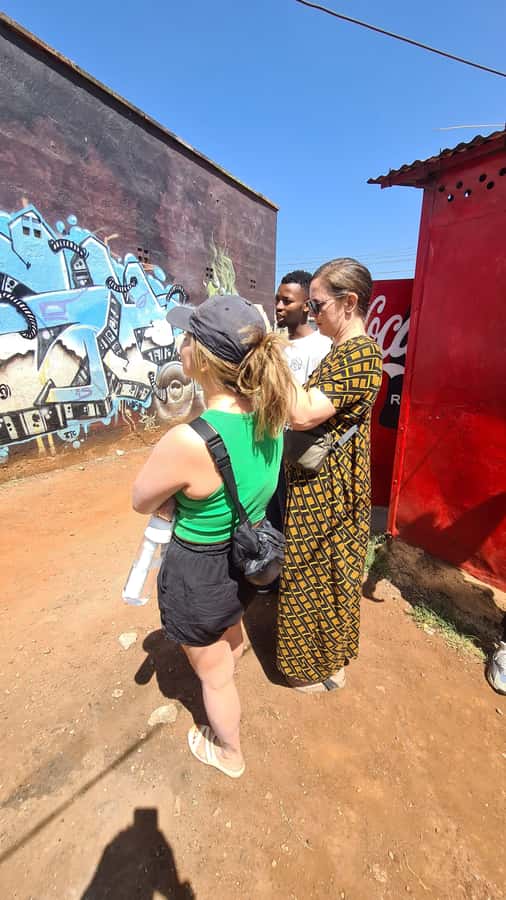
The tour meets outside Gateway Supermarket on Kibera Station Road. There’s no parking for this meet-up point, so the smart move is to come by Uber or taxi and treat the area like a “drop off, then walk” kind of start.
Timing matters here. You should plan for a real street walk, not a museum-style experience. Expect that you will pass people going about daily life and the guides will tell you when photography is okay. That’s not just etiquette, it affects how the tour feels. When you follow the guidance, you’ll spend more time learning and less time worrying.
Language is another practical plus. Tours are run in English and Swahili, so you can usually understand the explanations even if you’re not fluent in Swahili.
More Kibera Tours in Nairobi:
- Nairobi: Explore Kibera Slum with Local Guides
★ 4.9 · 365 reviews - Kevins Kibera Slum Tours
★ 5.0 · 213 reviews - Nairobi: Kibera Slum storytelling tour with a Local
★ 5.0 · 185 reviews
The Sun Valley Guides: Saviour, Tony, Anton, and Anthony as Art Ambassadors
A big part of the value here is the guide experience. The tour is led by local artists connected to Sun Valley Art Collective, and the vibe is ambassador-like. In the feedback you’ll see names like Saviour and Tony, plus Anthony and Anton with their art-team context. The common thread is that the guides don’t position themselves as tour directors reading facts. They present as artists with opinions, routines, and long-term commitments to the community.
Because the group is kept small (about one guide for every two guests), questions stay manageable. You get time to ask things like what inspires a piece, what it’s responding to, or how art fits into youth life and community organization.
It also helps that the guides communicate the work’s social layer. You’re not just learning the “what,” you’re learning the “why.” That’s the difference between seeing murals as decoration and understanding them as commentary.
Stop One: The Kibera Slum Walk and the Murals That Do the Talking

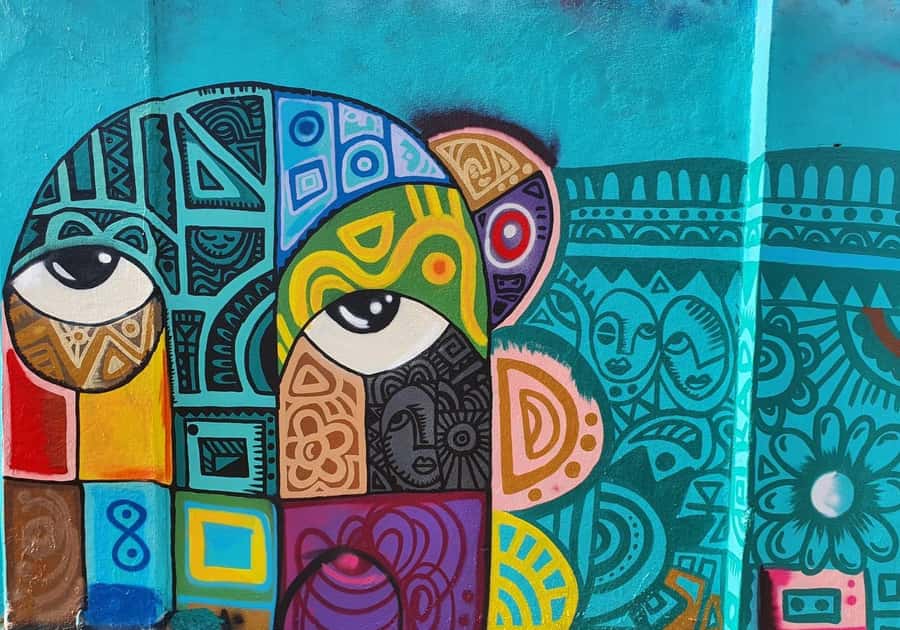
After the meet-up, the core chunk is a walking loop through Kibera. This is where you’ll see educational murals and urban art dotted around the area, plus a mix of collaborative works and individual pieces.
What makes this segment important is the storytelling method. You’re being shown through the artists’ perspectives, so you get a different frame than the common stereotypes about informal settlements. Instead of focusing on pity or fantasy, the murals and conversations keep pointing toward daily systems: how people support learning, how creativity connects to youth development, and how art becomes a channel for voice.
Also, pay attention to the pauses. The guides will stop at certain works long enough to explain their themes. If you rush through, you miss what you came for.
Practical tip: wear comfortable shoes. Kibera footpaths can be uneven, and you’ll be walking between multiple art points even before you reach the longer special visit.
Hidden-Visit Style Stop: A 30-Minute Detour With Extra Context

On the route, there’s a dedicated 30-minute stop at a smaller “extra” location. The idea is simple: it gives you time to slow down and see another layer of the art network, rather than only moving from mural to mural.
Because the exact spot details aren’t always the same from group to group, treat this segment as a bonus context window. You’ll likely get more explanation from the guides, and it’s a chance to ask questions without the pressure of constant walking.
How to get the most out of it: ask about process. For example, what happens first, planning or sketching, and how the collective collaboration changes the final piece.
A few more Nairobi days worth pricing up
- Nairobi National Park Half-Day Tour; Free Wi-Fi connection
★ 5.0 · 878 reviews - Nairobi: National Park & Optional Elephants & Giraffe Center
★ 4.8 · 874 reviews - NAI NAMI: Nairobi Storytelling Tour with Street Children
★ 5.0 · 792 reviews - Nairobi National Park Half-Day Game Drive
★ 4.5 · 738 reviews
Street Food Stops: Small Samples, Big Local Understanding
This is one of those tours where the food is not an afterthought. You’ll stop at street vendors for snacks, and street food samples are available on request. That phrasing matters, because it signals you should communicate dietary needs early.
Even if you don’t eat much, watch how the guides handle the food stops. They’re an on-ramp into local life, and you’ll usually hear explanations that connect back to creativity and community rather than treating food as a random break.
If you’re someone who likes to learn by doing, this part is a low-risk way to slow down and get comfortable. If you’re sensitive to street-food decisions, you can still participate by sticking to what the guide recommends as safest for a first-timer, or by taking a pass and just drinking water.
Studio and Art Collective Visits: Where the Art Comes From

One of the most memorable segments is the chance to visit studio-related spaces and collectives connected to the artists. The tour is designed to go beyond what’s on walls. You’ll have opportunities to visit artists’ houses and studios, plus see connected art initiatives.
The Sun Valley Collective shows up here as more than a name. The idea is that they run a platform for creative expression, and that their work links to practical community life. In the descriptions, the collective’s mission is tied to helping young people channel their passion and build skills.
In addition, you may see allied creative crafts in related spaces. One example mentioned in the feedback: a welder who creates animals out of recycled metal, and even a gallery showing work including blown glass made from recycled glass. Your specific mix may vary, but this is the kind of adjacent creativity the tour is set up to show you.
Buying Art Directly From Artists: How This Tour Adds Real Value
This tour isn’t only about viewing. Along the way, you’ll have multiple opportunities to purchase local art directly from the artists. That’s a big part of why the price can make sense.
Why? Because you’re not paying just for guides and walking time. You’re also buying the output of the people doing the storytelling and taking the risks of being in the public eye while making art. If you’ve ever felt uncomfortable buying souvenirs that feel disconnected from the community, this approach is different. Your purchase can be a continuation of the conversation you had at the murals.
A practical note: bring cash if the guides recommend it, and budget for artwork you genuinely want. The best purchases are the ones you can explain in one sentence: why you liked it and what it means based on what you heard.
Also keep in mind that artworks are not included in the tour price. The chance to buy is part of the experience, but it’s not bundled.
Finishing Near Olympic Stage, Wrapping Up at HOF Gallery Kibera
The tour ends near HOF Gallery Kibera, close to the Olympic stage area. The reason that matters for planning is logistics: you can more easily call an Uber or grab a taxi afterward, or use a matatu if that’s your style.
Plan your next step with enough buffer for shopping, conversations, and time to pack up any purchases. If you’re flying later the same day, this might be tricky depending on what you buy, but for most normal city schedules it’s workable.
What to Bring for a Comfortable, Respectful Walk

This tour is all about comfort and courtesy, so pack accordingly.
Bring:
- Comfortable shoes
- Hat (sun can be intense)
- Camera (but be ready to follow photo guidance)
- Water
- Closed-toe shoes
- Snacks, if you want extra buffer
Also, keep your behavior considerate. Littering is not allowed, and because you’re moving through a neighborhood where people live their day, the guide will instruct you on when it’s appropriate to take photos.
Price and Value: Is $45 a Fair Deal for Two to Three Hours?
At $45 per person for about 150 minutes, the price is not “cheap,” but it can be good value if you care about meaning and access.
Here’s why it can feel worth it:
- You get a small-group experience with a high guide-to-guest ratio
- You see mural art plus connected studios and collectives
- You get food snack sampling on request
- You have direct buying opportunities with the artists themselves
If your goal is only photos and quick facts, you may feel the cost more. If your goal is to understand how art supports community life and give your money to the people behind it, you’ll likely view the price more as a relationship-building tool than a sightseeing fee.
Who This Tour Fits Best (and Who Might Want Something Else)
This is a great match if you:
- Like street art with context, not just pretty walls
- Enjoy talking with local creators and asking questions
- Want a respectful, guided way to learn about daily life through art
- Are okay with walking and stopping often
It might not be the best fit if you:
- Need wheelchair access or mobility accommodations, because it is not suitable for that
- Want a low-walking, short attention-span tour
- Are uncomfortable moving through a working neighborhood where people are going about their day
Should You Book This Kibera Street Art Tour?
I think you should book it if you want more than a mural photo. This tour is built around stories from Sun Valley artists and offers real access to studio-linked spaces, plus food stops and the option to buy directly from the makers.
Book it now if:
- You care about art as a social tool
- You want to meet artists like Saviour, Tony, Anton, or Anthony through their work
- You plan to spend time listening, not speed-walking
Skip it (or look for a different format) if:
- You need zero walking or limited physical activity
- You want a strictly controlled environment with no street etiquette reminders
- You only want surface-level sightseeing without community context
In short, this tour works best when you show up curious, respectful, and ready to connect murals to real life.
FAQ
Where is the meeting point for the Kibera street art tour?
You meet outside Gateway Supermarket on Kibera Station Road. The location is described as safe for meeting.
How long does the tour take?
The tour lasts about 150 minutes, which is typically 2 to 3 hours depending on the flow of stops.
What does the tour include besides walking and art viewing?
It includes guided access through Kibera’s murals and urban art, visits to art collectives and studio-related spaces, and street food samples on request.
Can I buy artwork during the tour?
Yes. There are multiple opportunities to purchase local art directly from local artists during the route. Artworks are not included in the tour price.
What languages are the tours offered in?
Guides offer tours in English and Swahili.
Is it okay to take photos?
You’ll pass people going about their daily lives. The tour asks you to be respectful and the guide will tell you when it’s appropriate to take photos.
Where does the tour finish?
The tour finishes near HOF Gallery Kibera, close to Olympic stage, where you can get an Uber or taxi more easily.
Is the tour suitable for wheelchair users or mobility impairments?
No. It is not suitable for people with mobility impairments or wheelchair users.
Newest write-ups from Nairobi
- Visit kibera Slum the chocolate city★ 4.8 · 3 reviews
- 3 days maasai mara migration safari★ 4.5 · 7 reviews
- 4 Days Tour Landcruiser in Masai Mara and Lake Nakuru★ 5.0 · 10 reviews
- 4 Days Safari to Lake Nakuru N/P and Maasai Mara N/R★ 5.0 · 18 reviews
- Maasai Mara Day Trip★ 5.0 · 15 reviews
- Day Tour to Nairobi national park, Elephants, and Giraffe Center★ 3.5 · 8 reviews
- Wildebeest Migration in Masai Mara and Sightseeing 4 Days Tour★ 4.5 · 6 reviews
- Kibera Slum Tour with a Local★ 5.0 · 15 reviews
Kibera Tours, compared.





Kibera Slum Tour with Local Social Entrepreneurs
Read our review →


Browse the lists this tour appears in