
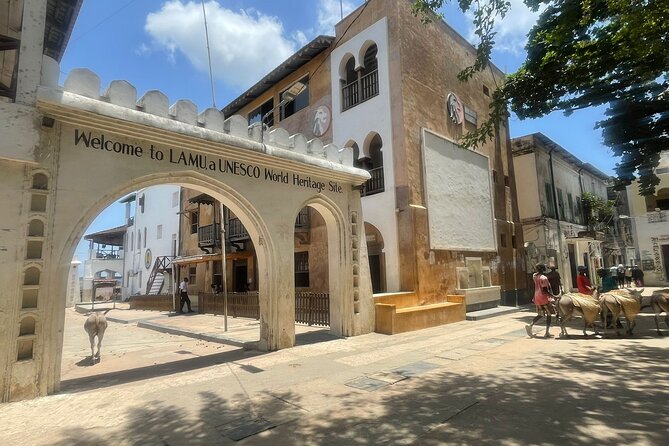
REVIEW · WALKING TOURS
Lamu Old Town Walking Tour
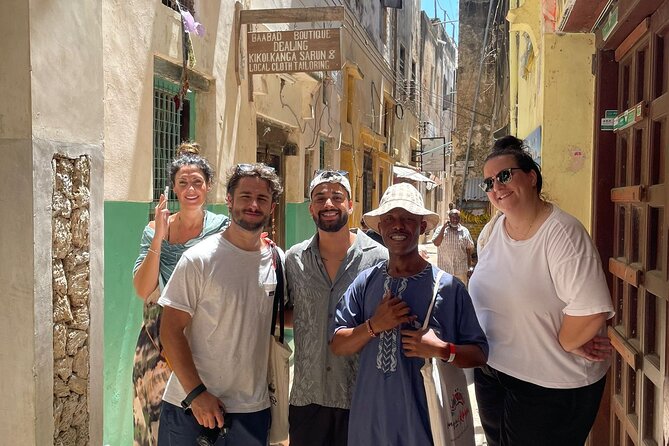
Lamu Old Town rewards slow steps. This walk through Lamu’s narrow coral streets mixes Swahili culture with real working shops, so you get more than photos. I like how the guide points out the details most people miss, like carved doorwork and the rhythm of local music.
My favorite part is how Kassim makes the whole experience practical, including where to spend your money on souvenirs and how to move through town without backtracking. One thing to plan for: entrance fees are not included for the fort and museum, so bring extra cash if you want to go inside.
In This Review
- Key highlights to know before you go
- Why Lamu Old Town feels different on foot
- Meet Kassim at Lamu Town Square, and what the timing really means
- Coral streets, carved doors, and Swahili music moments
- Lamu Market and the working craft shops
- Lamu Fort and Lamu Museum, and the Oman to British timeline
- German post office and Swahili house museum architecture
- Donkey sanctuary and the human side of Old Town
- Weaving, wave knitting, and local products you can spot later
- How Kassim helps you plan beyond the walk
- Value check: $20 for 2 to 3 hours in the middle of Old Town
- Who this tour suits best
- Should you book the Lamu Old Town Walking Tour?
- FAQ
- What is the price for the Lamu Old Town Walking Tour?
- How long does the tour last?
- What is included in the price?
- What entrance fees are not included?
- Where is the meeting point?
- How big is the group?
- What ticket format do you use?
- Is this tour dependent on weather?
- What is the cancellation policy?
Key highlights to know before you go

- English guide Kassim gives you context, local tips, and smart shortcuts through Old Town.
- Coral streets and sea front make the walk feel like a living neighborhood, not an open-air checklist.
- Wood-carving doorwork and silver craft shops show how local art is made, not just displayed.
- Lamu Fort and Lamu Museum connect Oman, British rule, and the story of Witu.
- Donkey sanctuary and everyday crafts add a warmer, more human side to the tour.
- Short 2 to 3 hours is the right length for a half-day plan, without burning your whole day.
Why Lamu Old Town feels different on foot
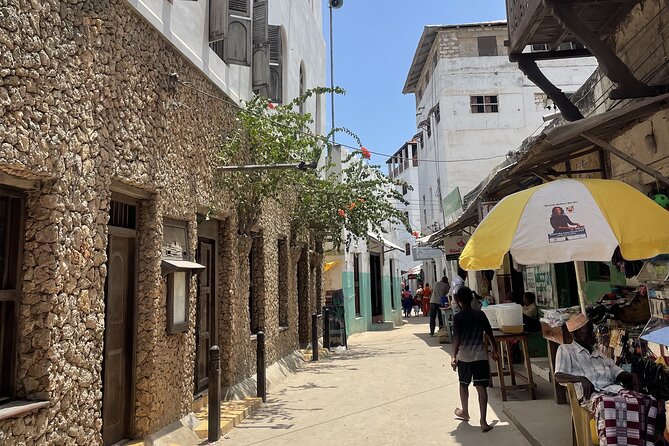
Lamu is one of those places where the setting is the main character. The lanes stay narrow, the corners keep coming, and you start noticing textures you would skip if you drove or hurried. A walking tour is the best way to catch that feeling, especially when you’re also seeing the Lamu seafront and the coral-and-wood architecture that defines Old Town.
You’re not just hearing generic “this is historical” facts either. The guide weaves together history, Swahili culture, and coastal craft traditions you can actually see in motion. The group size stays small, up to 15 people, so you’re not stuck behind a wall of shoulders.
The tour is also a good match for mixed travel styles. If you like architecture, you’ll enjoy the doors and houses. If you like culture and music, the Swahili music stops change the tempo of the walk.
More Walking Tours in Kenya:
- Nairobi: Historic and Modern Highlights Walking Tour
★ 4.8 · 703 reviews - Walking Tour Through Old Town Mombasa and Fort Jesus
★ 5.0 · 393 reviews - Nairobi Historical Walking City Tour
★ 5.0 · 258 reviews
Meet Kassim at Lamu Town Square, and what the timing really means
You meet at Lamu Town Square (PWJ2+FWW), and the tour ends back at the same meeting point. That matters more than it sounds, because Lamu’s streets can feel like a maze at first. Knowing you’ll return to your starting area makes the walk low-stress.
The duration is about 2 to 3 hours, and that’s a sweet spot for Lamu Old Town. Long enough to visit several key stops, short enough that you still have energy for food, beach time, or other activities later. The tour uses a mobile ticket, so you’ll want your phone charged, and keep the ticket ready when you check in.
The guide is fluent in English, and the walk is described as suitable for most travelers. If you have mobility limits, you’ll still want to be honest with yourself about uneven, tight streets and the fact that this is walking through a real neighborhood, not a paved heritage mall.
Coral streets, carved doors, and Swahili music moments
As you move through Old Town, the tour focuses on the details that give Lamu its look and feel. You’ll pass authentic narrow streets and corners, plus houses built with coral. Even if you’re not a hardcore architecture fan, the structure and materials make an impression fast.
Then there are the door carvings. Lamu is famous for woodwork, and you’ll see carvings on doors across the town. The guide’s explanations help you connect what you see on the surface with the craft behind it, so you’re not just admiring decoration.
One of the best sensory parts is the Swahili music. Even short musical moments can do a lot in a small town square or by the seafront. It breaks the walking routine and makes the culture feel lived-in, not staged.
Lamu Market and the working craft shops
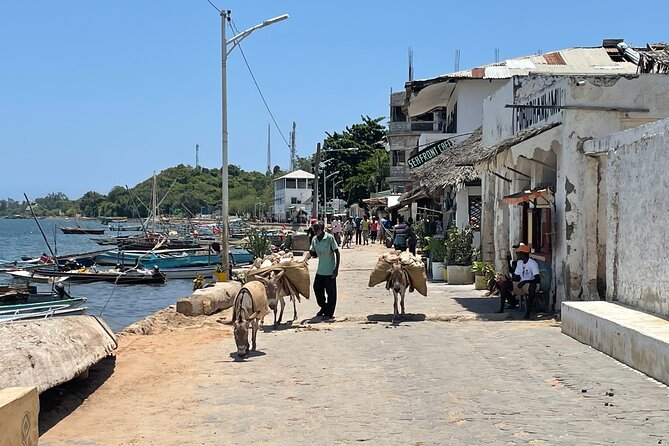
A major value of this tour is that you get guided access to places tied to everyday life. The route includes Lamu Market, along with wood carving and silversmithing working shops.
What you should look for is process. When a craft shop is active, you can often see how makers think, how they shape materials, and how they work through small steps. The tour also covers local products like weaving, silversmithing, and wood carving, plus wave knitting. Even if you do not plan to buy anything, it helps you understand why these items exist and who they serve.
There’s also a practical angle. In the strongest review, Kassim is described as helping with tips and best places to buy souvenirs. That’s real value in a place like Lamu, where the best options may not be the first shop you stumble into.
Good move: bring a little patience. Market and craft areas can be busy, and you’ll want time to look without feeling rushed.
Same trip, a different part of the country:
- Nairobi National Park Half-Day Tour; Free Wi-Fi connection
★ 5.0 · 878 reviews - Nairobi: National Park & Optional Elephants & Giraffe Center
★ 4.8 · 874 reviews - NAI NAMI: Nairobi Storytelling Tour with Street Children
★ 5.0 · 792 reviews - Nairobi National Park Half-Day Game Drive
★ 4.5 · 738 reviews
Lamu Fort and Lamu Museum, and the Oman to British timeline
The tour includes Lamu Fort and Lamu Museum, with time to see key areas from outside and hear the story behind what you’re looking at. Keep in mind: entrance fees inside the fort and museum are not included, so if those are priorities, plan your budget.
The museum story is especially interesting. It is described as connecting multiple eras: it served as a palace for the Oman king. Later, during British rule, it was used as headquarters for the Imperial British East African Company. After that period, it was converted into a museum. Hearing that sequence while you’re standing near the exhibits makes the history feel less abstract.
Outside the museum, you’ll also see canons. The tour notes these canons were used to bomb the Sultanet at Witu. Even if you only catch a few details, that image sticks. It’s a reminder that this coastal town has been shaped by power, trade, and conflict as much as by art and daily life.
Drawback to consider: since entry fees are extra, you may need to decide on the spot how much you want to go inside during your 2 to 3 hour window.
German post office and Swahili house museum architecture

Old Town isn’t only Swahili. The tour route includes a German post office, which adds a surprising layer of colonial-era presence in the area. It’s the kind of stop that helps you understand why Lamu feels like a blend of influences rather than one single cultural thread.
You’ll also see a Swahili house museum with unique architecture. The value here is learning to read the built environment. Coral houses, door carvings, and the way spaces are arranged all show how people adapted to coastal life and local materials.
If you like photography, these stops give you angles and textures. If you like culture, they help you understand that Swahili identity is not one style, it’s a way of living shaped by trade networks and local traditions.
Donkey sanctuary and the human side of Old Town
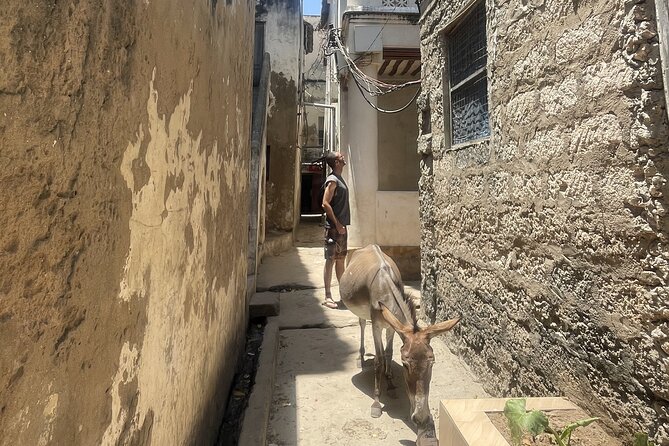
One of the stops built into this walk is the Donkey sanctuary. That shifts the vibe away from monuments and craft displays toward animal welfare and everyday compassion.
You’ll also notice how the tour keeps returning to real life. Between market areas, craft shops, and the sanctuary, it feels less like a tour that only circles famous walls and more like an introduction to how the town functions.
If you’re traveling with kids, this is usually the kind of stop that breaks up the history talk and gives everyone a more personal moment. Even for adults, it tends to be the part that makes you slow down.
Weaving, wave knitting, and local products you can spot later

The tour isn’t only about museums and forts. It includes local craft traditions such as weaving and wave knitting, plus additional local working shops for wood carving and silversmithing.
The best way to get value here is to keep mental notes for later. After the tour, you’ll be able to walk through markets with more confidence, spotting different techniques and recognizing what you saw in the shops. That turns shopping from random browsing into purposeful looking.
Also, craft culture on Lamu is not just a souvenir market thing. When a guide explains it in context, it helps you understand why these items matter to locals beyond decoration. You might not buy anything, but you’ll still come away with better understanding.
How Kassim helps you plan beyond the walk
A great guide doesn’t stop at the scheduled stops. Kassim is described as recommending local places to eat local food and Swahili cuisine, plus places to stay. That kind of advice is especially useful because you can waste time in Lamu if you chase reviews blindly instead of asking someone who knows the area.
He also suggests fun activities to complement your time, including sailing tours, fishing tours, and how to go to Takwa Ruins. Even if you do not book those during the walking tour itself, getting practical direction helps you build a real plan for the rest of your trip.
If you want an easy day structure, think like this: use the walking tour early enough to get your bearings, then let the guide’s food and activity tips shape your afternoon.
Value check: $20 for 2 to 3 hours in the middle of Old Town
At $20 per person, this tour can be a strong value because the cost covers a guide for the full time, not just a quick pass-by of sights. Over 2 to 3 hours, having someone fluent in English who can explain history, point you toward craft shops, and help you navigate the lanes is the real “product.”
The main cost caveat is that fort and museum entrance fees are not included. If you plan to go inside both, you’ll pay more than the headline price. Still, for many travelers, a guided walk that includes your “must sees” plus context and craft exposure often beats trying to DIY the same route without local guidance.
Group size helps too. With a maximum of 15 travelers, you’re less likely to feel like you’re part of a crowded herd. That also makes it easier to ask questions and get recommendations that fit what you actually care about.
Who this tour suits best
This is a good match if you want:
- A focused introduction to Lamu Old Town without committing to a long day
- Time on coral streets, door carvings, and working craft shops
- A guide who gives practical tips for souvenirs, food, and staying options
It may not be the best fit if:
- You want a museum-only day, since entry fees are extra and the tour is short
- You prefer a mostly private experience, since the group can reach 15 people
Should you book the Lamu Old Town Walking Tour?
If your goal is to understand Lamu, not just photograph it, I’d book this. The price is modest, the walk is timed well for a half-day plan, and the guide, Kassim, is repeatedly praised for going above and beyond with local tips, shortcuts, and genuinely friendly conversation.
Just be ready for the one budget twist: entrance fees are not included for the fort and museum. If you’re okay adding a little extra for those stops, this tour is an efficient, enjoyable way to start your Lamu trip with your bearings and your curiosity switched on.
FAQ
What is the price for the Lamu Old Town Walking Tour?
The tour costs $20.00 per person.
How long does the tour last?
It runs for about 2 to 3 hours.
What is included in the price?
The tour includes a tour guide for the time of the tour.
What entrance fees are not included?
Entrance fees inside the fort and the museum are not included.
Where is the meeting point?
The tour starts at Lamu Town Square, PWJ2+FWW, Lamu, Kenya, and ends back at the meeting point.
How big is the group?
The tour has a maximum of 15 travelers.
What ticket format do you use?
You receive a mobile ticket.
Is this tour dependent on weather?
Yes. The experience requires good weather. If it is canceled due to poor weather, you will be offered a different date or a full refund.
What is the cancellation policy?
Free cancellation is available up to 24 hours in advance for a full refund. If you cancel less than 24 hours before the start time, the amount paid is not refunded.
Newest write-ups from Kenya
- Watamu: Sunset Mangrove Canoe Tour with Coconut Drink★ 3.6 · 8 reviews
- Watamu: Learn Kenyan Cusine with Jonathan★ 4.1 · 8 reviews
- WATAMU: MALINDI: SARDEGNA ISLAND & MALINDI MARINE PARK★ 4.5 · 9 reviews
- Lake Nakuru Day Trip Safari – & Optional Lake Naivasha Boat★ 5.0 · 5 reviews
- Tsavo East National Park: 2-Day Tour from Mombasa★ 3.9 · 5 reviews
- Visit kibera Slum the chocolate city★ 4.8 · 3 reviews
- Lake Nakuru NP Half-Day Safari★ 4.0 · 4 reviews
- Tsavo East and Tsavo West Sanctuary Safari★ 5.0 · 3 reviews
Walking Tours, compared.


Walking Tour Through Old Town Mombasa and Fort Jesus
Read our review →

Nairobi Walking tour:Explore History Culture and Traditions
Read our review →

Nairobi City Walking Tour with Traditional Kenyan Lunch
Read our review →

Browse the lists this tour appears in