
REVIEW · WALKING TOURS
Karura Forest: Walking tour with Nature and Waterfalls.
A forest lesson that also takes great photos. This Karura Forest walk mixes wildlife spotting with history stops, then pays you back with two waterfalls and Lilly Lake bird time. I especially like the way the guide explains monkey behavior and keeps the pace friendly for a 3-hour tour.
One thing to plan for: you will be walking a fair bit on forest paths. Comfortable shoes matter, and the forest entry fee is separate from the $40 tour price.
In This Review
- Key things I’d circle before you go
- Karura Forest feels like Nairobi’s own escape hatch
- Meeting at Gate C and getting oriented fast
- What the walking route gives you, from woodlands to water sounds
- Monkey spotting without turning the experience into chaos
- Caves stop: history you can see, not just hear
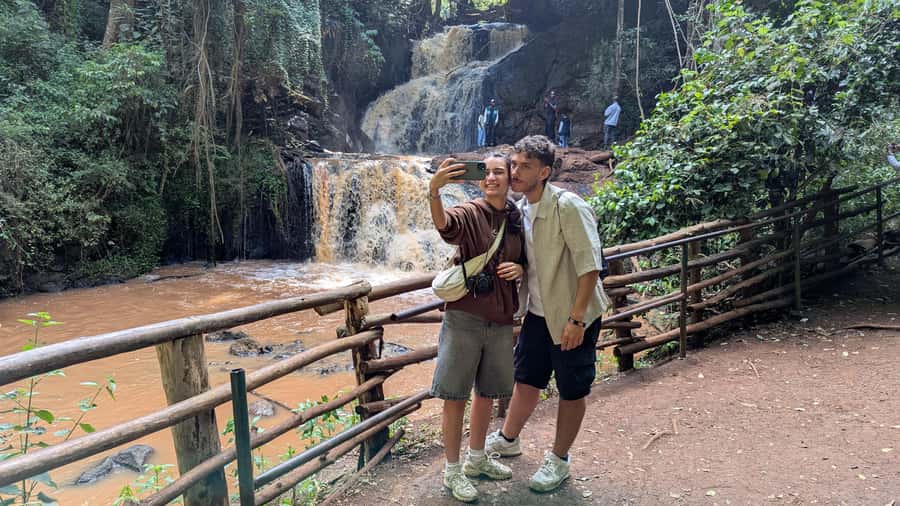
- Waterfall time: two different scenes for photos and breathing room
- Lilly Lake and bird viewing, the calmer chapter
- The River Cafe break: snack now, energy later
- Price and value: $40 tour plus $4 forest entry
- Practical tips that keep the day smooth
- Who should book this Karura Forest waterfall walk
- Should you book this tour?
- FAQ
- How long is the Karura Forest walking tour?
- How much is the forest entry fee, and how can I pay?
- Where do I meet the guide for the tour?
- What languages will the guide speak during the tour?
- What should I bring for the tour?
- What is not allowed in Karura Forest during this experience?
- Is there an option besides walking?
Key things I’d circle before you go
- Monkey behavior lessons that help you watch without crowding the animals
- Caves with local storytelling, not just a quick photo stop
- Two waterfall stops that work well for smartphone and camera shots
- Lilly Lake bird viewing, plus calmer water vibes after the waterfalls
- A planned River Cafe break so you do not rush, snack, and regret it later
Karura Forest feels like Nairobi’s own escape hatch
Karura Forest is one of those places that makes Nairobi feel bigger and calmer at the same time. You trade traffic and buildings for shaded woodland trails, waterfalls, and water movement you can hear before you see it. It is a solid half-day activity when you want nature without giving up your whole day.
I like that this tour gives you a clear mix: wildlife, history, water, and a little language practice. You end up with photos worth keeping, plus stories worth repeating. The guide, Allan, also gets praised for being a good conversationalist and storyteller, which makes the walk feel like more than just sightseeing.
Still, go in with the right expectations. This is not a sit-and-watch tour. You should expect a good chunk of walking and the need to follow forest rules.
More Walking Tours in Nairobi
- Nairobi: Historic and Modern Highlights Walking Tour
★ 4.8 · 703 reviews - Nairobi Historical Walking City Tour
★ 5.0 · 258 reviews - Nairobi Downtown Walking Tour
★ 4.7 · 208 reviews
Meeting at Gate C and getting oriented fast
You meet at Karura Forest Gate C, on Kiambu Road, opposite Sharks Palace. That matters because Karura has multiple gates, and it is easy to waste time if you aim for the wrong one.
At the start, there is a short safety briefing before you start moving. It is the kind of practical talk that helps you relax, especially when you are heading into areas with water, uneven ground, and monkeys overhead. If you have questions, you can message the guide on WhatsApp at 254723477823.
The tour runs about 3 hours, and the plan is built for steady walking plus stops where you can actually look and photograph.
What the walking route gives you, from woodlands to water sounds
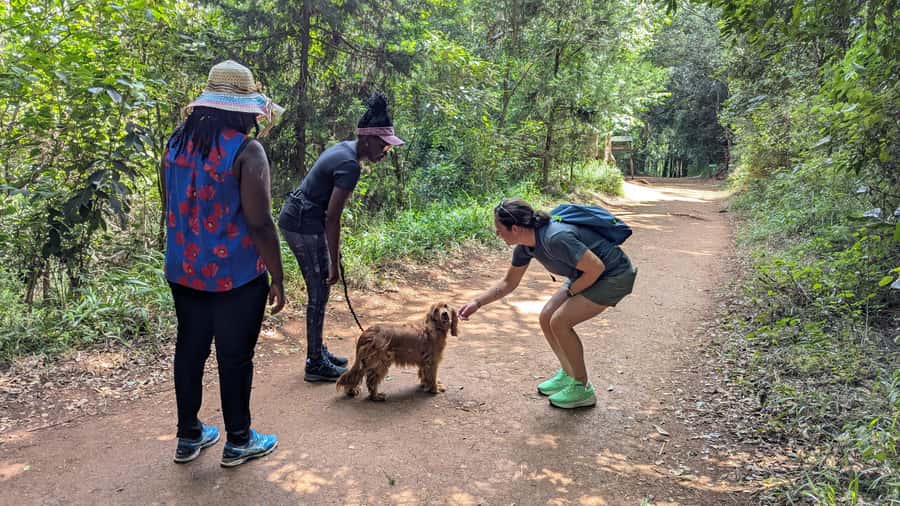
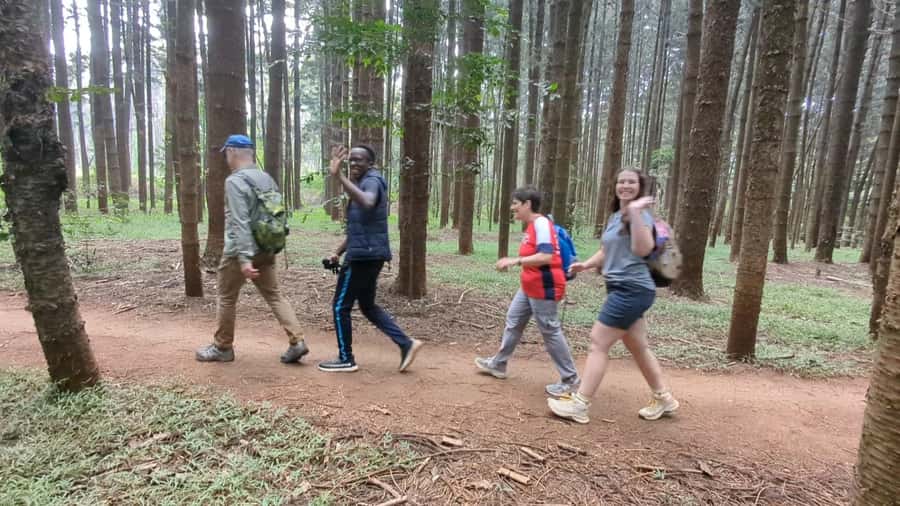
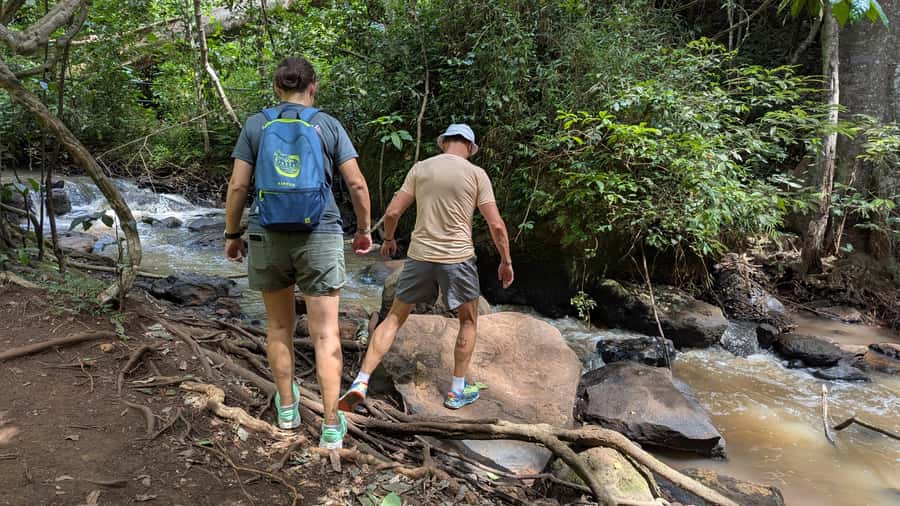
The tour route is basically a nature loop: woodland trails, viewpoints along the way, and several specific attractions. You are guided on foot through areas where you can see how the forest changes with light, water flow, and elevation.
A useful clue: one participant noted the walk is often around 6 to 7 km. Another said the up-and-down is not extremely steep, but the message is the same. If you show up in slick sandals, you will feel it. Bring shoes you trust.
This is also the kind of walk where timing helps. Start calm, move at a conversational pace, and then use the photo stops to slow down. If you try to power through, you miss the point.
Monkey spotting without turning the experience into chaos
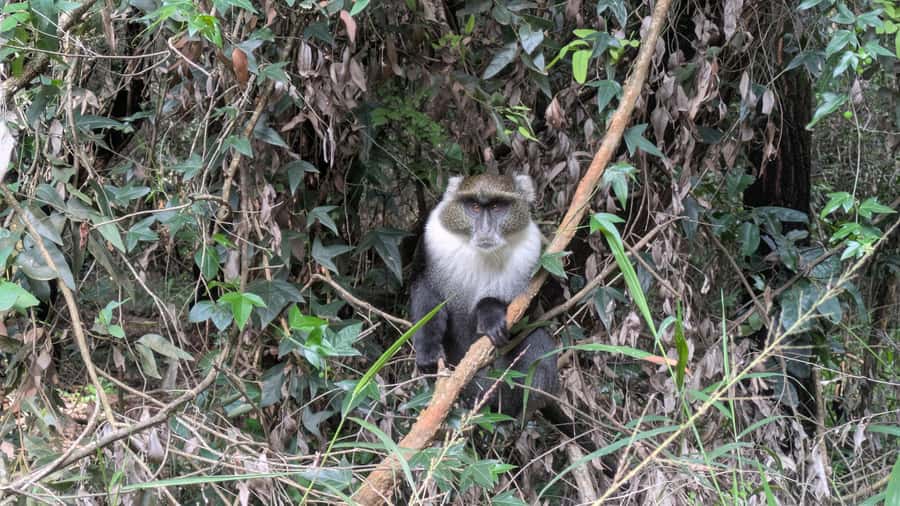
The monkey part is not just an animal sighting. The tour focuses on monkey characteristics and behavior, so you learn what you are looking at. That makes your sightings more meaningful, and it also helps you act responsibly in the monkeys’ space.
You will pass through areas where monkeys live and move through the forest. The guide helps you understand things like how monkeys behave when they are relaxed versus when they feel bothered. The key skill for you is reading body language from a distance, not chasing for a closer view.
Forest rules matter here. Feeding animals is not allowed, and it is for good reason. When people offer food, it changes behavior and can create problems for wildlife and for visitors. So if a monkey looks curious, admire from where you are standing and let the forest stay the forest.
Same trip, a different part of the country:
- Nairobi National Park Half-Day Tour; Free Wi-Fi connection
★ 5.0 · 878 reviews - Nairobi: National Park & Optional Elephants & Giraffe Center
★ 4.8 · 874 reviews - NAI NAMI: Nairobi Storytelling Tour with Street Children
★ 5.0 · 792 reviews - Nairobi National Park Half-Day Game Drive
★ 4.5 · 738 reviews
Caves stop: history you can see, not just hear
Karura’s caves are one of the reasons people keep returning. In this walk, you get time to explore the famous caves and learn about their history. Even if you only have a short time in Nairobi, this gives context to the forest that you would miss if you just walked around without guidance.
I like this kind of stop because it is visual. You can connect the story to the physical space: the cave setting, the way it feels cooler, the way people used and understood these places. One participant described the caves as an educational part of Kenyan people’s history, and that matches the overall tone of the tour, practical and rooted in place.
There is also a photo angle. Caves can be tricky for lighting, so you benefit from having someone guide the timing and where to stand.
Waterfall time: two different scenes for photos and breathing room
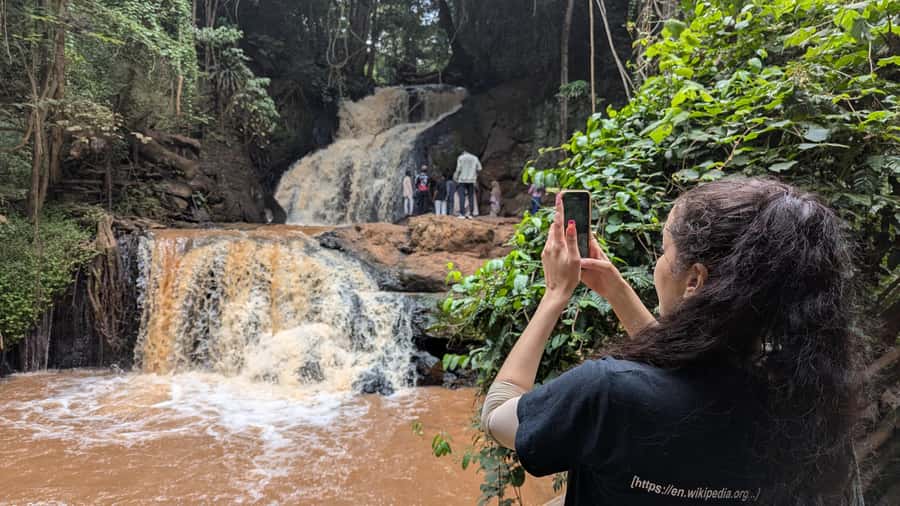
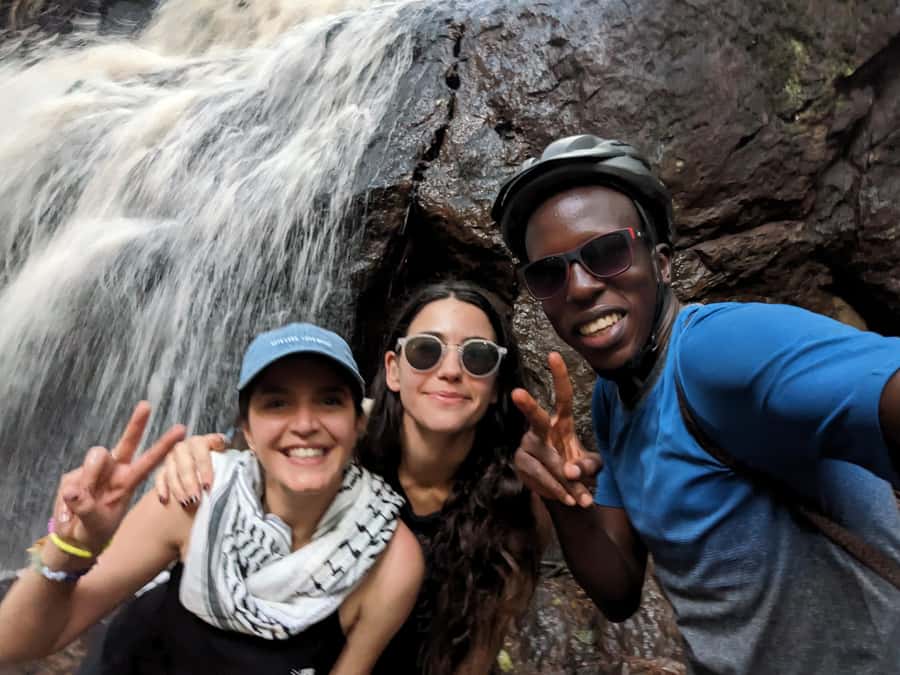
Waterfalls are the big payoff of this tour. You visit two waterfalls, and each one gives you a different look and feel. That variety matters because it keeps the walk from turning into one long “water, water, water” moment.
Also, waterfalls reset your senses. Even in a city like Nairobi, the sound and mist create that back-to-nature shift. You walk under trees, then the air changes when you reach the water.
If you are visiting during rainy seasons, you might notice extra water movement along waterways and rapids. That can make the forest even more dramatic, but it also means paths may be damp. Plan for careful steps, not speed.
For photography, you will get time for pictures at the waterfall stops. Smartphones do well here because the contrast is strong: dark green foliage, pale water, and bright highlights.
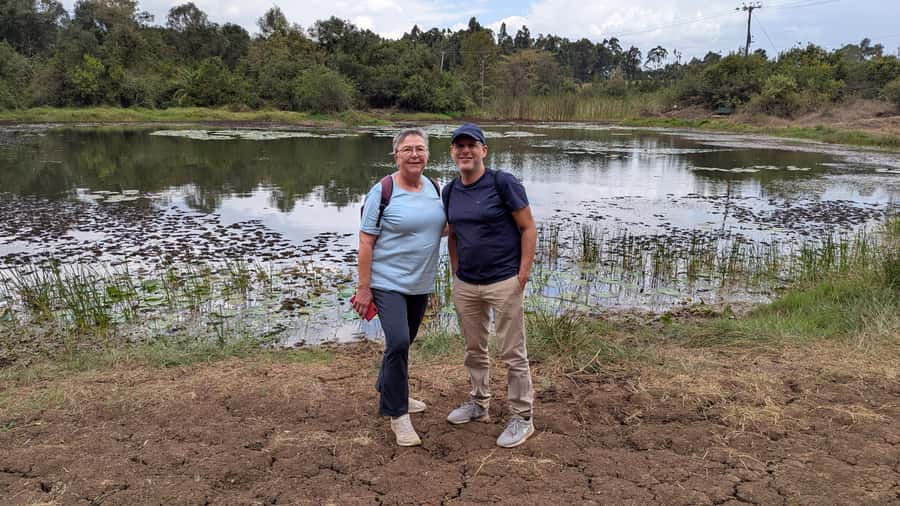
Lilly Lake and bird viewing, the calmer chapter
After the waterfalls, the tour shifts into a quieter rhythm with Lilly Lake. This is where you get a chance to slow down and look for birds in the lake area and nearby territories.
Not every bird appears on demand, but the structure of this stop helps. You are in the right place, you have time to scan, and the guide can point out what to look for. One of the highlights is seeing different bird species, and even when you only spot a few, the lake setting is a nice break from constant movement.
If you like birding, this is a compact intro. You learn to watch behavior and movement patterns, not just species names.
The River Cafe break: snack now, energy later
About two-thirds of the way through the walk, you get a break at The River Cafe. It is scheduled as a 20-minute break with sightseeing time. The point is simple: you get a chance to rest, hydrate, and grab food if you want it.
The restaurant is mentioned as having very good food and a nice ambience. That means you are not stuck with only vending snacks or a random roadside stop. If you want to keep your energy up for the second half of the forest loop, this is the right time to do it.
If you tend to get hungry on walks, plan to buy something small. If you are not hungry, at least use the break to slow your breathing and cool down.
Price and value: $40 tour plus $4 forest entry
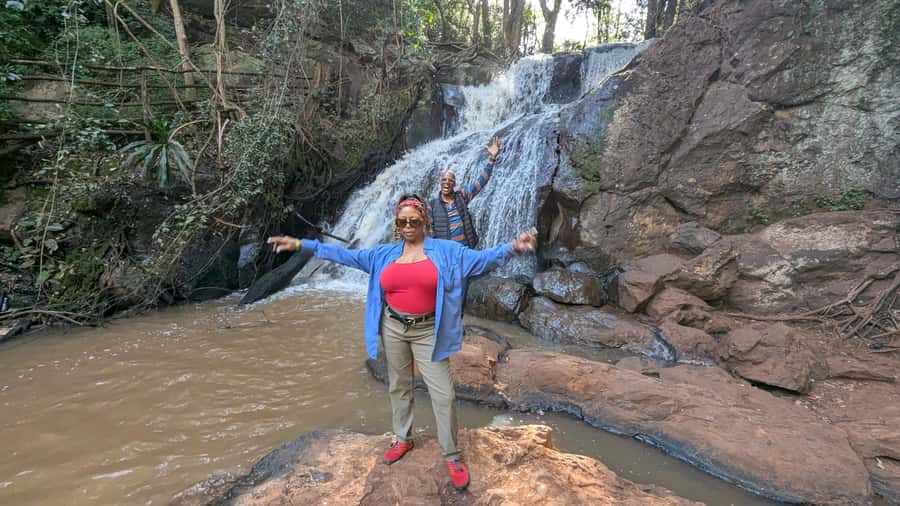
The tour price is $40 per person, and it includes the local guide fee. Forest entry is extra at $4, and payment is done via card or M-PESA. Cash is not the right move here.
So your realistic baseline is about $44 total before any personal spending at the cafe. That is fair for a guided 3-hour experience with multiple major stops, not just one attraction.
Where the value really shows up is in the guidance. You are paying for interpretation: monkey behavior, caves and Kenyan context, plus practical help spotting and photographing. Without that, you could walk the forest on your own, but you might miss the story and the “watch this” moments that make a guided tour worth it.
Language is part of the value too. The guide speaks Swahili and English, which helps you connect with what you are seeing instead of only processing it as background scenery.
Practical tips that keep the day smooth
A few rules and packing tips matter a lot in Karura Forest:
- Bring comfortable shoes and clothes you can move in. Paths can be uneven, and water stops mean slick spots.
- Plastic bottles are not allowed in the forest. Bring your own reusable water bottle.
- No smoking, no drones, and no alcohol or drugs.
- You cannot feed animals, even if a monkey looks friendly.
Also, the tour is not for everyone. It is listed as not suitable for pregnant women. If you have mobility concerns, you might want to ask the guide ahead of time, because the walking portion is a real part of the experience.
One smart option: if walking all three hours sounds like too much, there is also a cycling possibility. Rental bicycles are available at the gate for Ksh 500. That can be a good compromise if you want forest time without every step.
Who should book this Karura Forest waterfall walk
You’ll likely love this if you want a nature break that still feels structured. It works well for solo travelers who want a guide-led day and clear stopping points. One participant even mentioned the guide helped them with extra nearby sightseeing, like visiting the railway museum and getting a Nairobi viewpoint at KCC, which shows the guide is willing to go beyond the walk for people who ask.
It also makes sense if you want a first taste of Karura, because the stops hit the forest’s most talked-about highlights: caves, waterfalls, and Lilly Lake.
Where it might not fit: if you dislike walking, if you are uncomfortable with wildlife being nearby, or if you need a fully flat route.
Should you book this tour?
Yes, I would book it if you want a guided forest experience with clear highlights and real interpretation. The best reasons are the combination: monkey behavior guidance, caves with local historical context, and two waterfalls plus Lilly Lake in a tight 3-hour window.
Book it especially if you care about photos and want help choosing the right moments. Bring your walking shoes, follow the forest rules, and you will get a day that feels both peaceful and educational.
If you are unsure, message Allan at 254723477823 before you go with any practical questions about your comfort level. A quick clarification can save you from guesswork and help you enjoy the forest instead of managing stress.
FAQ
How long is the Karura Forest walking tour?
The tour lasts about 3 hours.
How much is the forest entry fee, and how can I pay?
The forest entry fee costs $4. Payment is done via card or M-PESA, and cash is not accepted.
Where do I meet the guide for the tour?
Meet at Karura Forest Gate C on Kiambu Road, opposite Sharks Palace.
What languages will the guide speak during the tour?
The guide speaks Swahili and English.
What should I bring for the tour?
Bring comfortable shoes and comfortable clothes.
What is not allowed in Karura Forest during this experience?
Smoking, drones, and alcohol or drugs are not allowed. Feeding animals is also not allowed.
Is there an option besides walking?
Yes. The tour notes that you can do some cycling, and rental bicycles are available at the gate for Ksh 500.
Newest write-ups from Nairobi
- Visit kibera Slum the chocolate city★ 4.8 · 3 reviews
- 3 days maasai mara migration safari★ 4.5 · 7 reviews
- 4 Days Tour Landcruiser in Masai Mara and Lake Nakuru★ 5.0 · 10 reviews
- 4 Days Safari to Lake Nakuru N/P and Maasai Mara N/R★ 5.0 · 18 reviews
- Day Tour to Nairobi national park, Elephants, and Giraffe Center★ 3.5 · 8 reviews
- Wildebeest Migration in Masai Mara and Sightseeing 4 Days Tour★ 4.5 · 6 reviews
- Maasai Mara Day Trip★ 5.0 · 15 reviews
- Kibera Slum Tour with a Local★ 5.0 · 15 reviews
Walking Tours, compared.

Walking Tour Through Old Town Mombasa and Fort Jesus
Read our review →

Nairobi Walking tour:Explore History Culture and Traditions
Read our review →

Nairobi City Walking Tour with Traditional Kenyan Lunch
Read our review →
Browse the lists this tour appears in