
REVIEW · ELEPHANT ORPHANAGE TOURS
From Nairobi: David Sheldrick Elephant Orphanage Tour
Baby elephants make time fly. This tour is interesting because you get a structured, close-up look at how the David Sheldrick Wildlife Trust cares for orphaned elephants, right during the daily feeding window. I like the tight focus on elephant care and conservation, and I also love the up-close interaction as the babies trot out and slurp milk from giant bottles behind a rope fence. One drawback to consider: the drive can include extra shopping or craft stops, and the overall day can feel rushed if you miss the presentation timing, plus there may be extra required conservation donation cash on top of the tour price.
The core experience happens in a small open viewing area, with staff explaining why each elephant is there and what the team does next in rehab. For many people, the best part is the calm, practical guidance from the caretakers, which turns cute feeding into real conservation context. Price-wise, the $69 tour rate can feel like a deal, but you should budget for the mandatory park fee and any conservation donation so you are not surprised at payment time.
In This Review
- Key highlights to look for before you go
- Nairobi to the orphanage: what that drive really means
- Walking in: what you will see at the David Sheldrick center
- The milk-feeding walkthrough: babies, bottles, and how care is explained
- The older babies: ages 2 to 3 and the rehab progression
- Why these elephants are orphaned: the causes you will hear
- Price and logistics: what $69 does and does not include
- What you should pack and plan for your one-hour window
- Who this tour suits best
- Should you book this Nairobi elephant orphanage tour?
- FAQ
- What time do you get picked up in Nairobi?
- What time does the orphanage visit happen?
- How long is the tour?
- Is the elephant orphanage entry ticket included?
- What extra fee is mandatory to access the orphanage?
- Is lunch included?
- Is a Giraffe Center visit included?
- How big is the group?
- Can I cancel for a full refund?
Key highlights to look for before you go
- Hotel pickup and drop-off in Nairobi so you do not wrestle with timing or transport on your own
- Daily milk-feeding window timed so you arrive for the main viewing segment
- Guided walkthrough with Sheldrick staff explanations on rescue stories and rehab progress
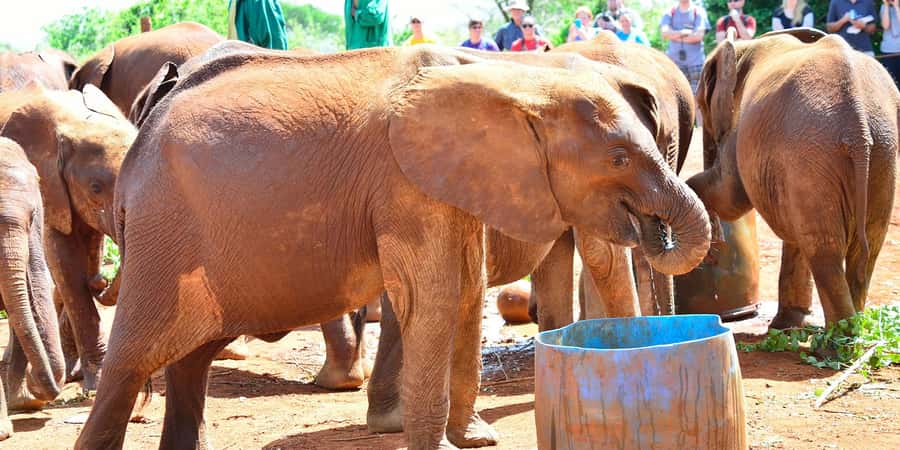
- Close viewing from a rope fence with chances to photograph and watch water play
- Small group of up to 8 participants for a less chaotic experience
- Clear conservation themes like poaching, wells, and human wildlife conflict
Nairobi to the orphanage: what that drive really means
This tour starts with pickup in Nairobi from your hotel or home at 9:30 AM. The vehicle ride time is listed around 2 hours in total, but the practical reality is that Nairobi traffic can stretch things. That is why the timing matters, even though the elephant center visit is relatively short.
You are generally aiming to reach the David Sheldrick Wildlife Trust area in time for the daily walkthrough and feeding segments. The schedule you should plan around is that the center visit runs from 11:00 AM to 12:00 PM, in an open space enclosed with a rope fence around the viewing area. If you get stuck behind traffic or you add stops on the road, you can end up feeling like you are sprinting for the right moment.
A quick note on guides: on past departures, guides like Stephen have been praised for navigating entry and keeping everyone moving so you reach the gates and viewing area on time. Another guide, Martin, came up in one piece of feedback where you can tell the difference between a driver who follows the plan and one who tries to add extra stops. I recommend you set expectations early, especially if you want zero detours.
More elephant orphanage visits:
- Elephant Orphanage and Giraffe Center Tour with Options
★ 4.5 · 457 reviews - Nairobi National Park, Elephant Orphanage and Giraffe Centre
★ 4.6 · 365 reviews - From Nairobi: Elephant Orphanage and Giraffe Center Day Trip
★ 4.5 · 235 reviews
Walking in: what you will see at the David Sheldrick center
Once you arrive, the vibe shifts fast. You leave the city and step into a controlled, staff-led viewing space where the elephants are the main event. You walk through the center area with a guide while Sheldrick staff conduct the feeding and explanations in sequence.
The viewing space is open, not a dark indoor hall, and you get a rope fence separating you from the elephants. That fence matters because it sets the rules for close viewing without turning the experience into chaotic crowd pushing. You are there for education and observation, not for feeding or risky behavior.
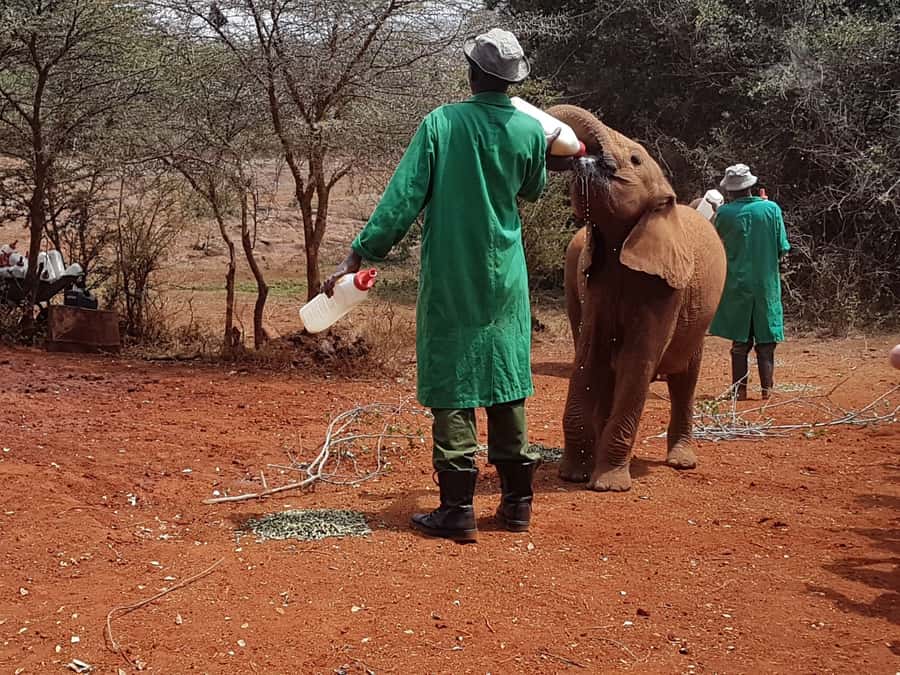
As the youngest elephants come out, you will see keepers standing ready with giant bottles of milk. The keepers are not improvising. They follow a care routine, and the staff explanations help you connect what you are watching to what happens after rescue.
And yes, the elephants are adorable. The point is that the cuteness is backed by a conservation system that is trying to fix the harm that caused the orphaning in the first place.
The milk-feeding walkthrough: babies, bottles, and how care is explained
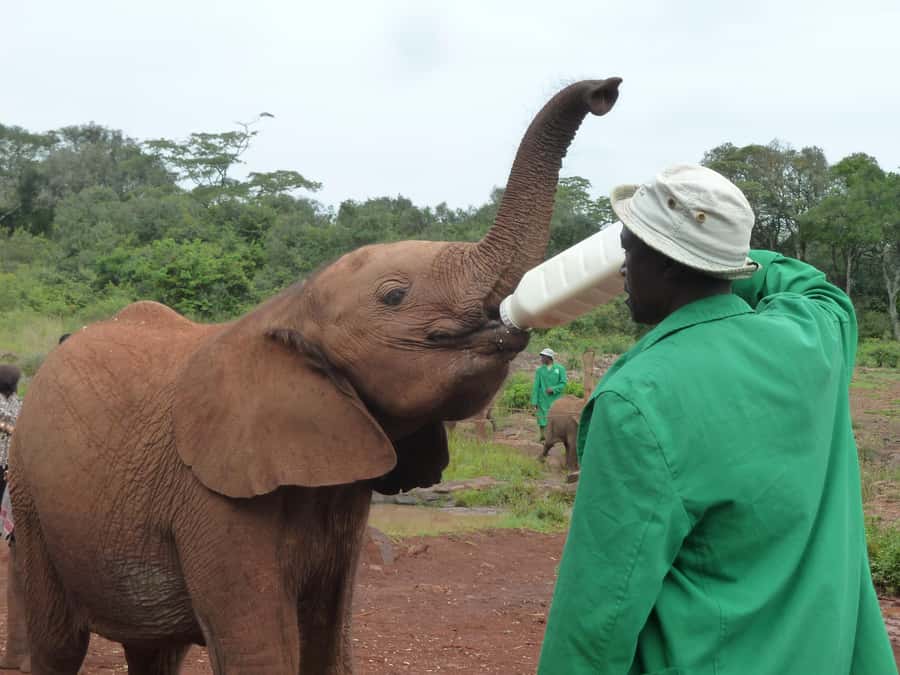
The feeding portion runs in clear stages. The youngest elephants typically come trotting out to greet their keepers, and then you get a short window where each baby elephant slurps and drinks milk from the bottles.
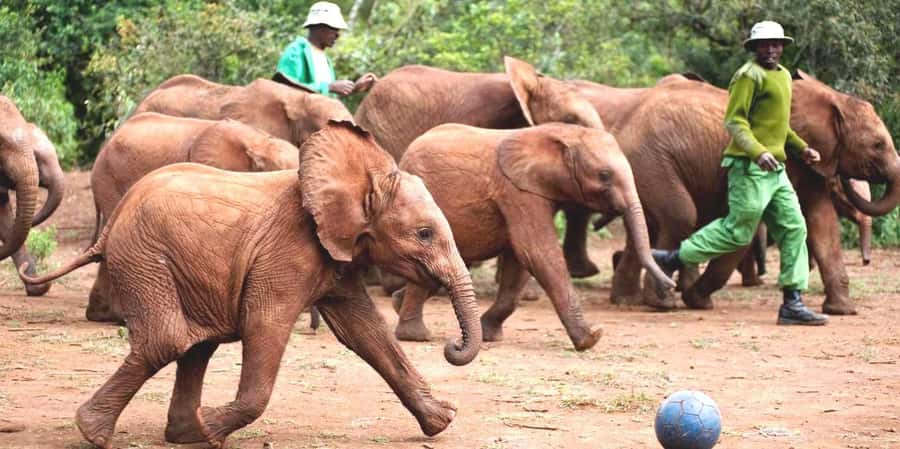
From the tour description, plan on about 10 to 15 minutes of feeding focus for the youngest group. After they finish, keepers bring water for play time. This is where the session becomes extra watchable. Elephants splash, move around, and let you see their behavior in a more natural, playful way, not only in feeding mode.
Throughout, you also get information on each elephant’s story: how old they were when they arrived, where they were rescued from, and what got them into trouble. It is not just a generic script either. The staff tends to connect the dots between rescue causes and the rehab plan.
Photography is allowed in the viewing area, and the experience is structured enough that you can take pictures without feeling like you missed half the milk session. One review also highlighted that you might even be able to give the elephants a little pet when they are close. If that is the case on your day, it is usually brief and depends on how close the team lets visitors get in the flow of the routine, so keep an eye on staff direction.
After the youngest are fed and led back toward the bush area, the keepers move on to the next age group.
The older babies: ages 2 to 3 and the rehab progression
Once the youngest group clears the feeding area, the session shifts to elephants around ages 2 to 3. This is a key detail because it shows progression. You get to compare behavior and dependence.
Some of these young elephants can feed themselves, while others are still fed by their keepers. Watching that difference helps you understand that rehab is not a single moment. It is a staged process where the goal is gradual independence while keeping the elephants healthy and safe.
In the description, you can also look for a very specific type of behavior: trunks holding large milk bottles, and elephants closing their eyes like they are savoring it. It is funny and sweet, but it is also a good reminder that these animals are still young and need constant care. That is what turns the experience from a photo stop into a conservation lesson you can actually repeat later.
A few more Nairobi days worth pricing up
- Nairobi National Park Half-Day Tour; Free Wi-Fi connection
★ 5.0 · 878 reviews - Nairobi: National Park & Optional Elephants & Giraffe Center
★ 4.8 · 874 reviews - NAI NAMI: Nairobi Storytelling Tour with Street Children
★ 5.0 · 792 reviews - Nairobi National Park Half-Day Game Drive
★ 4.5 · 738 reviews
Why these elephants are orphaned: the causes you will hear
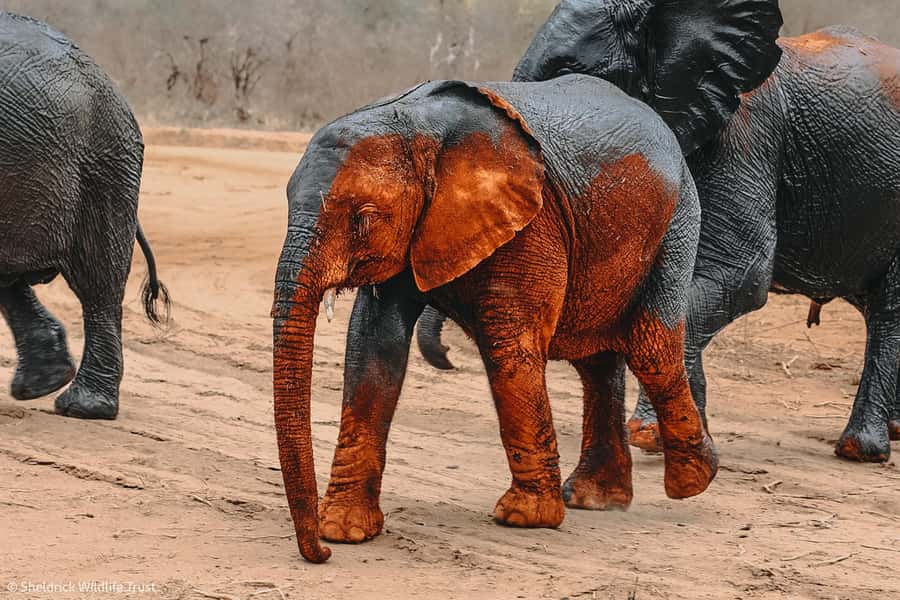
The staff explanations are built around the reasons orphan elephants end up in the care of the Trust. The most common causes listed in the tour information are:
- Mothers poached
- Falling into wells
- Human wildlife conflict
Hearing these causes while you are watching the feeding routine is powerful because it adds context to what would otherwise be just cuteness. These are not random tragedies. They are direct consequences of threats humans create or intensify, and the Trust’s rehab program is designed to respond to those emergencies.
This is also where the tour earns its keep. If you only want wildlife spotting in a car window, this is not that. The value here is learning how conservation works after a rescue, not just appreciating animals in the abstract.
Price and logistics: what $69 does and does not include
The headline price is $69 per person for a 1 hour activity. That sounds straightforward, but the full cost depends on what you must pay in Kenya to access the site and support conservation.
Here is what the tour price includes:
- Pick up and drop off within Nairobi
- Elephant orphanage entry ticket
- Elephant orphanage entry fees
Here is what is not included:
- $85 per person for Nairobi National park, which is listed as mandatory to access the orphanage
- Lunch, available for purchase
- Optional Giraffe Center visit for $25 per person
On top of that, one important conservation cost came up in feedback: a required conservation donation reported as $45 USD cash per person. Because it is not listed in the base inclusions above, I strongly suggest you budget for it and bring cash if that applies on your date. Even if the donation details vary by day, you will feel better walking in prepared.
So is it good value? For me, the answer is yes if you want a structured, guided, close-up elephant care experience rather than DIY logistics. But if you are trying to keep costs ultra-low, the mandatory park fee and potential cash donation can make this feel pricier than the headline suggests.
Also note the shopping detours issue. One piece of feedback said extra art and craft center stops took extra time. Another described shopping stops that were not on the tour description, and they had to ask the driver to reduce them. If you care about the timing for feeding, tell your guide at pickup what matters most: the orphanage and the exact feeding window.
What you should pack and plan for your one-hour window
This is a short, concentrated experience, so the best preparation is practical.
First, plan your schedule so you do not have a tight connection right after. Pickup is 9:30 AM, and you will return back to Nairobi afterward, but the total day still depends on traffic and whether the route includes any extra stops. You want breathing room.
Second, bring cash for the items that may not be fully included. Based on the information above, that could mean the mandatory park fee and any conservation donation that is requested in cash.
Third, dress for an outdoors viewing session. You are in an open viewing area, and you will be standing or moving slightly while keeping an eye on the elephants and the staff instructions. Comfortable shoes help, since even small walking segments can add up.
Lastly, if you have specific timing goals, communicate them. If you want to prioritize the main feeding session, ask the driver and guide to stick to the planned route and reduce optional stops. Past feedback even names guide Stephen for being accommodating when the group requested a quick coffee or souvenir stop, which tells me the best approach is simple, polite communication, not surprise requests at the last minute.
Who this tour suits best
This works best if you:
- Want an elephant conservation education experience, not just general sightseeing
- Like guided explanations tied directly to what you are seeing
- Prefer a small group up to 8 participants over a packed bus situation
- Enjoy close wildlife viewing from a controlled and safety-minded setup
It may feel less ideal if you:
- Hate any extra stops and want a perfectly strict schedule
- Are very budget sensitive once you add the mandatory park fee and possible donation
- Are prone to running late, since the feeding window is time-based and the drive can be affected by traffic
Should you book this Nairobi elephant orphanage tour?
I think this is a strong booking when you want the most meaningful version of a short time in Nairobi. The structure is a big plus: pickup, a timed visit, and staff explanations tied to rescue reasons like poaching, wells, and human wildlife conflict. The best moments are the milk-feeding sequence and the staged progression from the youngest elephants to the next age group.
If you do book, go in with a clear budget plan. The $69 base price is only part of the story once you add the mandatory $85 Nairobi National park fee and any required conservation donation cash. Also set expectations about extra shopping stops so your hour stays focused where it matters.
If that sounds like your style, book it.
FAQ
What time do you get picked up in Nairobi?
Pickup is from your hotel or home within Nairobi at 9:30 AM.
What time does the orphanage visit happen?
The walkthrough and viewing is described as occurring from 11:00 AM to 12:00 PM.
How long is the tour?
The tour duration is listed as 1 hour.
Is the elephant orphanage entry ticket included?
Yes. The tour includes the elephant orphanage entry ticket and the elephant orphanage entry fees.
What extra fee is mandatory to access the orphanage?
You must pay an additional $85 per person for Nairobi National park, which is listed as mandatory to access the orphanage.
Is lunch included?
No. Lunch is not included, but it is available for purchase.
Is a Giraffe Center visit included?
No, the Giraffe Center is optional and costs $25 per person.
How big is the group?
The tour is a small group limited to 8 participants.
Can I cancel for a full refund?
Yes. The tour offers free cancellation up to 24 hours in advance for a full refund.
Newest write-ups from Nairobi
- Visit kibera Slum the chocolate city★ 4.8 · 3 reviews
- 3 days maasai mara migration safari★ 4.5 · 7 reviews
- 4 Days Tour Landcruiser in Masai Mara and Lake Nakuru★ 5.0 · 10 reviews
- 4 Days Safari to Lake Nakuru N/P and Maasai Mara N/R★ 5.0 · 18 reviews
- Day Tour to Nairobi national park, Elephants, and Giraffe Center★ 3.5 · 8 reviews
- Wildebeest Migration in Masai Mara and Sightseeing 4 Days Tour★ 4.5 · 6 reviews
- Maasai Mara Day Trip★ 5.0 · 15 reviews
- Kibera Slum Tour with a Local★ 5.0 · 15 reviews
Elephant Orphanage Tours, compared.
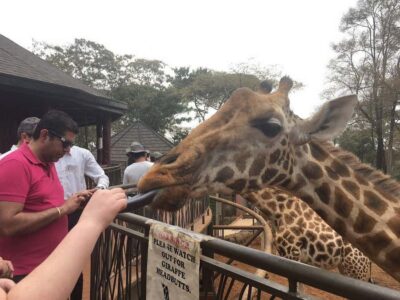
Elephant Orphanage and Giraffe Center Tour with Options
Read our review →
Nairobi National Park, Elephant Orphanage and Giraffe Centre
Read our review →

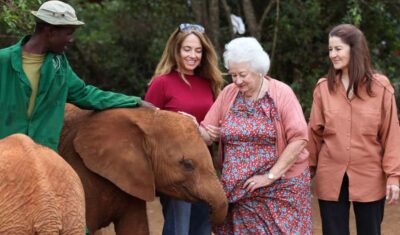
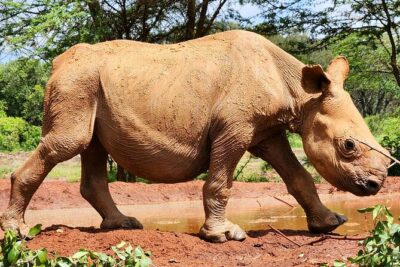
Half day tour to Elephant orphanage & Giraffe Centre Nairobi
Read our review →
National Park, Elephant Orphanage & Giraffe Center
Read our review →
Giraffe Centre, Elephant Orphanage, and Bomas of Kenya Day Tour from Nairobi
Read our review →Browse the lists this tour appears in