
REVIEW · DIANI BEACH TOURS
giraffe feeding
Three hours, big giraffe smiles. In Coast Province, Kenya, this hands-on visit to Bora Bora Wildlife Sanctuary pairs giraffe feeding with a guided walk that focuses on conservation, not just photos.
I especially like two parts: the fully guided experience led by multi-lingual guides, and the chance to feed more than one animal, including Maasai giraffes along with zebras and African warthogs. A lot of the value here is that you are not left to wander.
One thing to think about before you book is the price relative to the time on-site. You get about 2 hours walking and feeding, plus transfers, and a few details can make it feel pricey if you mainly want a quick, casual look at animals.
In This Review
- Key things to know before you go
- Bora Bora Sanctuary in Kenya, where feeding is the main event
- The Diani pick-up and the 10:00 start you should plan around
- Check-in and the conservation angle on 31 acres
- Feeding Maasai giraffes, zebras, and African warthogs on a guided walk
- Ostriches, peacocks, and other sightings you can’t plan but can enjoy
- How the guiding works, and why multilingual support is a real value
- Price and value: when $115 feels fair, and when it might not
- What to bring for comfort and better animal time
- Who this giraffe-feeding tour is perfect for
- Should you book this giraffe-feeding tour?
- FAQ
- What time does the tour pick me up in Diani?
- How long is the giraffe feeding experience?
- What animals can I feed?
- Is the tour fully guided, and what languages are available?
- What is included in the price?
- What is not included?
- Where does the tour take place and what is the price?
Key things to know before you go
- Pick-up from Diani at 10:00, with return transfer by about 1:00 pm
- About 2 hours inside the 31-acre Bora Bora Wildlife Sanctuary
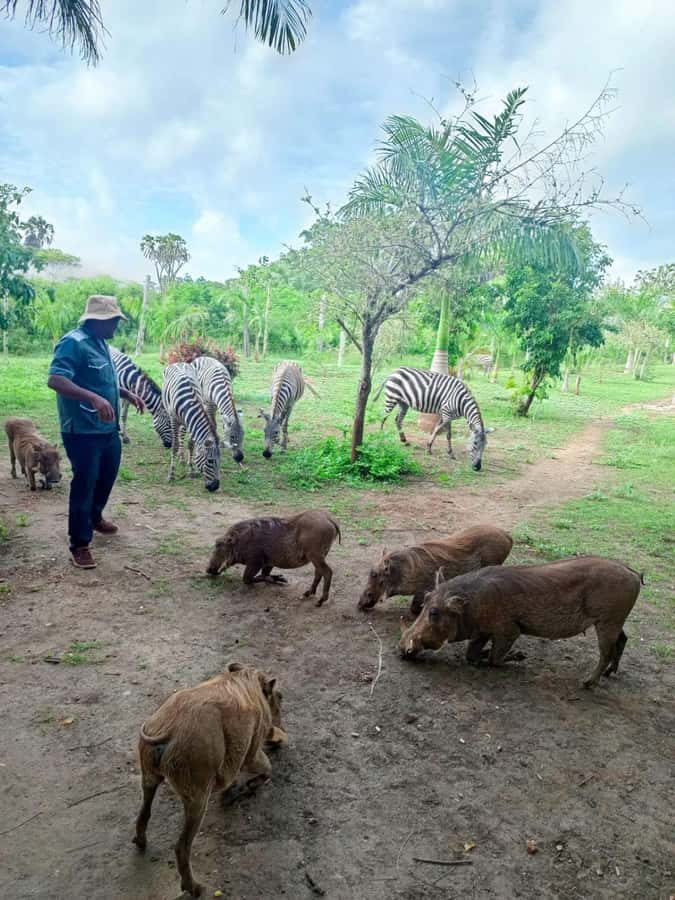
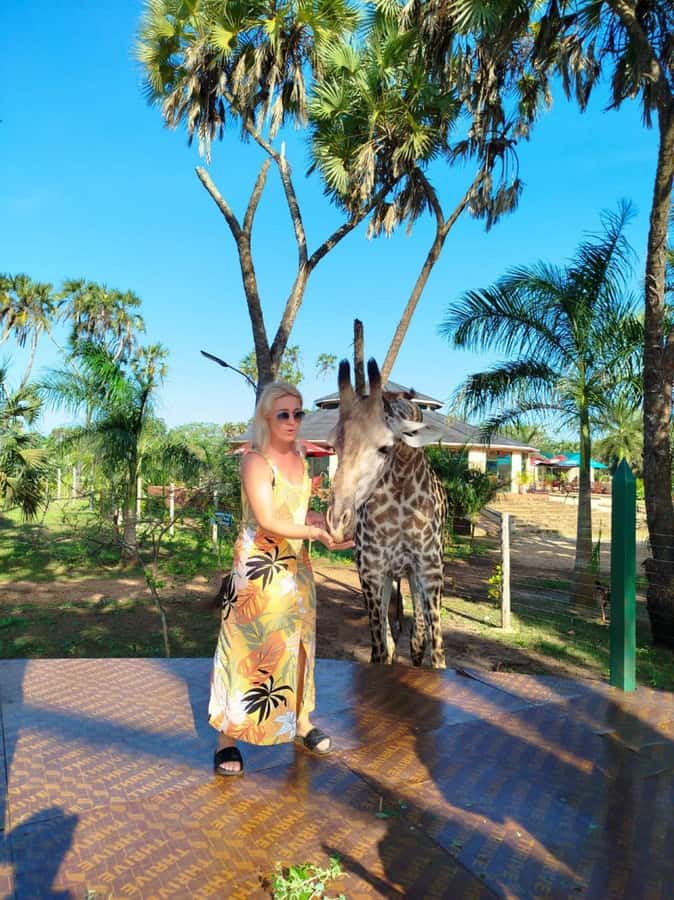
- Hands-on feeding can include Maasai giraffes, zebras, and African warthogs
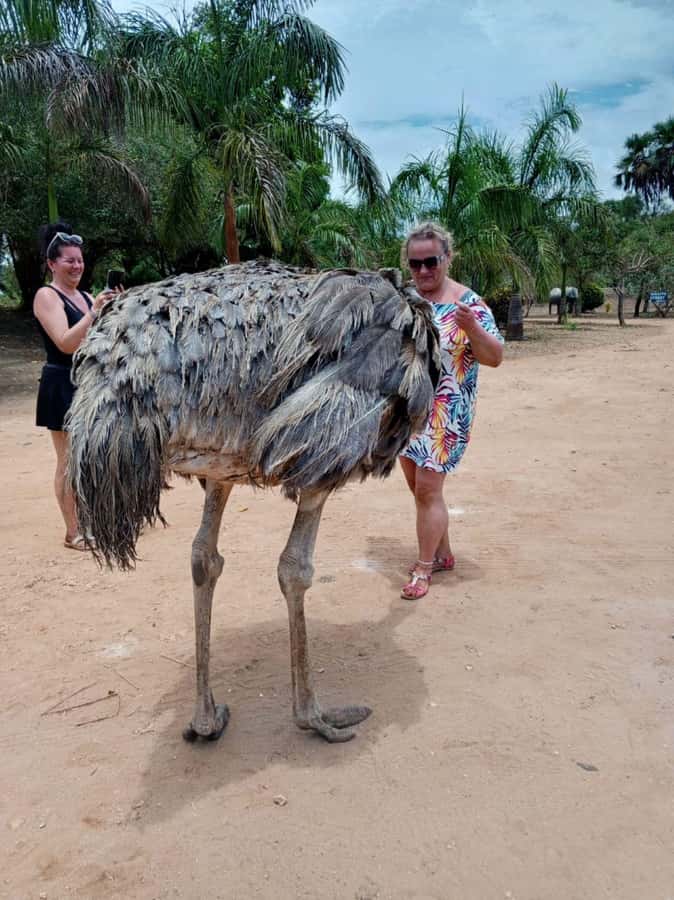
- You may see birds like Maasai ostriches and peacocks, plus other animals on the walk
- The tour includes park fees, guiding fees, and transfers within the Diani beach area
- Food and drinks are not included, so plan for a snack or water if you need it
Bora Bora Sanctuary in Kenya, where feeding is the main event
If your travel style is hands-on, this is a strong match. The whole experience is built around a guided nature walk through a 31-acre sanctuary, where you spend time close to animals and learn why conservation matters. You are not just driving past enclosures. You are walking, stopping, listening, and (yes) feeding.
The sanctuary setting also makes the visit more relaxed than many big wildlife outings. You can take your time with photos, and you get a guide to help you understand what you are seeing. This is also a good spot for people who want a Kenya wildlife experience but are short on days.
Where it can feel different from safari expectations is that this is a sanctuary setting. You are seeing animals at close range, and some of the experience is tied to the feeding routine and the guide’s flow, not a long, open-road chase for wild sightings.
A few more Diani Beach days worth pricing up
- PILLI PIPA DHOW, the genuine product, snorkeling tour to Kisite Marine Park
★ 4.5 · 217 reviews - Full-Day Special Wasini Island Tour with Snorkeling and Lunch
★ 4.5 · 184 reviews - Full Day Dolphin Watching with Snorkeling in Wasini
★ 5.0 · 88 reviews
The Diani pick-up and the 10:00 start you should plan around
The day starts with a 10:00 pick-up from Diani beach, then a short drive to Bora Bora Wildlife Sanctuary. The drive time is about 20 minutes, which helps a lot with the pacing. It means you spend most of your time on the actual walk, not in transit.
Your return is timed so you are back at your accommodation by about 1:00 pm. That makes this tour practical for travelers who are also trying to fit in beach time or lunch plans the same day.
One practical note: the vehicle comfort can vary, and you may find seating a bit low depending on the transport used. If you are sensitive to heat, the middle of the day timing can feel warm during the return. Bringing water and planning for sun exposure makes the whole morning smoother.
Check-in and the conservation angle on 31 acres
Once you arrive, you check in at the park and get a brief history of the sanctuary. This part matters because it frames the rest of the walk. You hear the “why” behind what you are doing, which makes the feeding feel more purposeful.
A guide then leads you around the grounds at a calm pace, with stops to explain animals and conservation importance. The emphasis is on understanding the role of the sanctuary and the care involved, not just collecting animal moments.
This is also where you get your bearings. In a place like this, knowing what you are looking for makes the feeding and spotting feel much more rewarding.
Feeding Maasai giraffes, zebras, and African warthogs on a guided walk
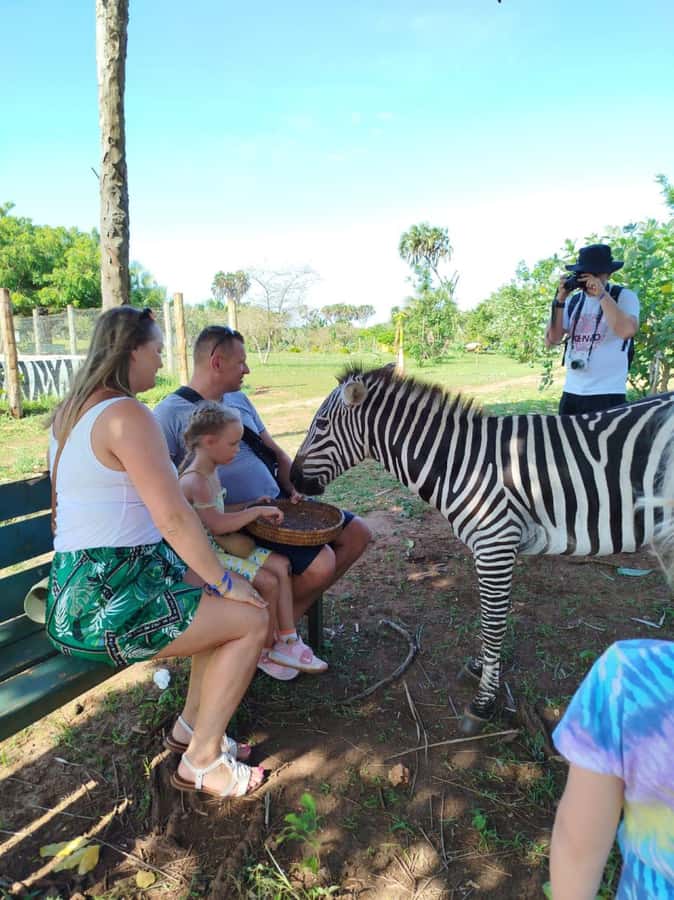
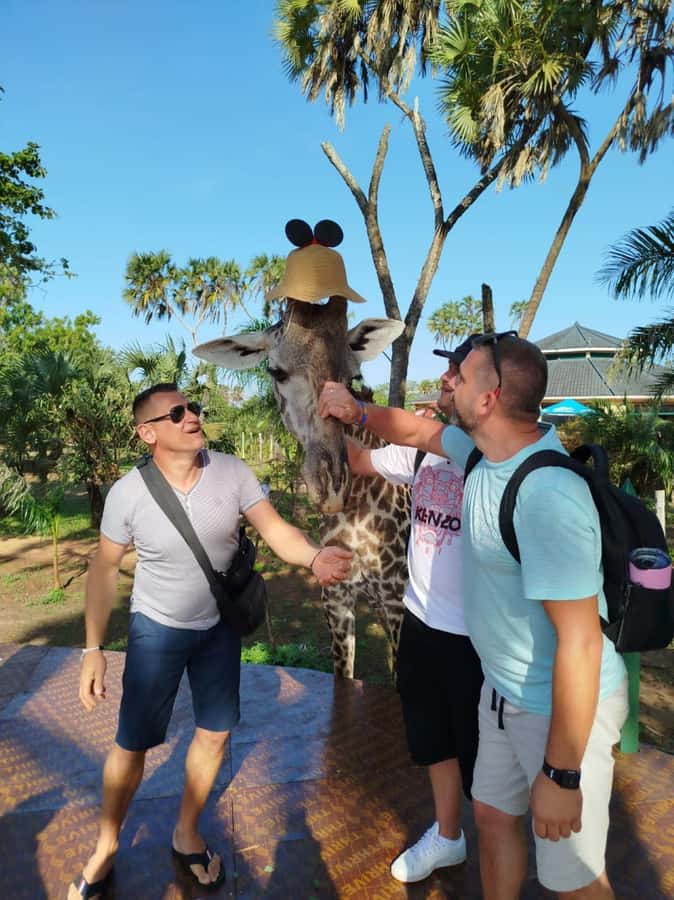
The highlight is the walk itself, roughly 2 hours long, where you can get involved with feeding. The experience is not “do it yourself.” Your guide keeps the pace, handles the feeding routine, and helps you stay safe around the animals.
Here are the feeding opportunities the itinerary calls out:
- Maasai giraffes
- Zebras
- African warthogs
You may also come across other animals during the walk, including monitor lizards, wild boars, and a hinge-backed tortoise. Even if you do not get to feed every species listed, the tour is structured so you spend time near a variety of animals and learn as you go.
What I like about this setup is that it turns a wildlife visit into an activity. You are engaged the whole time, and the guide can steer you toward what is most visible or most interesting in that moment. If you are traveling with kids, this type of feeding-focused route can hold attention well.
Two considerations to keep realistic expectations:
- Feeding access can depend on the animals’ comfort and timing, so it might not feel like a guaranteed feed-everything checklist.
- If your main goal is seeing a large number of species as quickly as possible, this sanctuary walk will feel different from a classic safari circuit.
Same trip, a different part of the country:
- Diani Beach: Glass Boat Cruise to Robinson Island
★ 4.6 · 69 reviews - Diani: Sunset Canoe Tour along the River with Mangroves
★ 4.8 · 65 reviews - Day Trip – Tsavo East National Park ( Man Eater Lions of Tsavo & Other Big Five)
★ 4.5 · 55 reviews - Diani Beach: Private African Pool Map Guided Tour
★ 4.7 · 52 reviews
Ostriches, peacocks, and other sightings you can’t plan but can enjoy
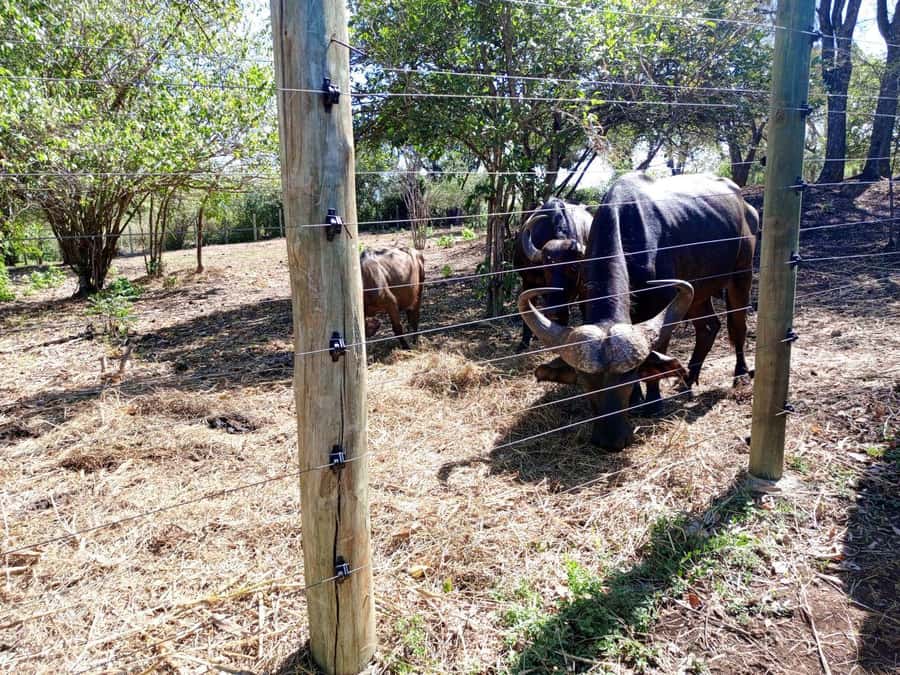
The tour also includes bird sightings, with specific mention of Maasai ostriches and peacocks. Birds can be some of the best “wait for it” moments on a short walk like this, because they often move quietly until you notice them close by.
The overview also points to the possibility of seeing Cape buffaloes and Nile crocodiles. The important practical takeaway is this: you should expect sightings to depend on where the animals are in the sanctuary at the time of your route.
This is exactly why the guide matters. Even on a short visit, a good guide can help you spot what is actually there and explain it in plain language. If you are not strong at animal spotting, you will likely feel more confident when you have someone pointing things out for you.
How the guiding works, and why multilingual support is a real value
A major strength here is the multi-lingual guiding. The tour lists live guidance in English, French, German, Polish, Spanish, and Italian. That is not just a nice-to-have. It changes the experience because conservation explanations and animal behavior become part of the memory, not just background noise.
In one instance, guides named Adam and Kelvin were part of the experience, and that kind of on-the-ground familiarity tends to make the feeding moments less awkward. When you have someone explaining the flow and answering questions in your language, you relax faster, and the whole walk feels smoother.
This is one of the reasons the tour can be worth the cost for many people. You are paying for the guided structure, not only the entry to the sanctuary.
Price and value: when $115 feels fair, and when it might not
At $115 per person for a 3-hour outing, this is not a bargain-basement activity. The math only makes sense if you care about the guided component and the feeding experience.
So here is my practical way to judge value before you book:
You will likely feel good about the price if:
- you want hands-on feeding and not just viewing
- you like having a guide in your language
- you value the included transfers from Diani
- you want a short, low-planning morning
You may feel it is overpriced if:
- you mainly want quick animal viewing and you are comfortable arranging your own transport
- you are expecting a longer, more expansive time in the sanctuary beyond the walk and feeding window
- you are sensitive to the fact that this is a sanctuary visit, with animals in controlled conditions
The key is that this tour sells a specific type of experience. If that matches your travel style, you will probably come away happy. If you want a high-volume wildlife day, you may leave wondering if your money could buy more time elsewhere.
What to bring for comfort and better animal time
Because food and drinks are not included, you should plan a bit. Even if you do not expect to eat, having water helps a lot. If you get warm during the return, you will be glad you thought ahead.
Also consider:
- sun protection for an outdoor walk
- closed-toe shoes for easy walking
- a small camera or phone setup that works well at close range (feeding gets photo time)
If you are traveling with a group, remind everyone to keep their schedule calm. The tour timing is tight enough that last-minute changes can affect your pacing.
Who this giraffe-feeding tour is perfect for
This one fits best for travelers who want a short, structured wildlife experience close to the beach. I think it is especially good for:
- first-time visitors to Diani who want Kenya wildlife without a full-day commitment
- families who enjoy interactive animal moments
- travelers who appreciate conservation context and guided explanations
- anyone who prefers comfort and convenience, since transfers and fees are handled
If you prefer long safari drives, wide-open landscapes, and lots of time chasing different sightings, you might find this feels too compact. It is a different kind of wildlife day.
Should you book this giraffe-feeding tour?
I would book it if you want giraffe feeding plus a guided walk that starts at 10:00 from Diani and gets you back by around 1:00. It is convenient, the guidance is multi-lingual, and the price includes a lot of the “gotchas” like park fees and transfers.
I would pause and compare options if the main draw for you is a cheap animal visit or if you expect more than about 2 hours on-site. The experience is short, and some people may feel the sanctuary format changes how they expect wildlife to look.
If you are clear that you are buying a guided, hands-on feeding experience in a 31-acre sanctuary, this tour can be a smart use of a morning.
FAQ
What time does the tour pick me up in Diani?
The pick-up from Diani beach is at 10:00, and the tour returns you to your hotel by about 1:00 pm.
How long is the giraffe feeding experience?
The total duration is listed as 3 hours, with about 2 hours spent walking around the park.
What animals can I feed?
The tour description says you can feed Maasai giraffes, zebras, and African warthogs during the guided walk.
Is the tour fully guided, and what languages are available?
Yes, you have a live tour guide. Languages listed are English, French, German, Polish, Spanish, and Italian.
What is included in the price?
Included are transfers within the Diani beach area to and from Bora Bora, park fees and government taxes, and the guide and guiding fee in the park.
What is not included?
Food and drinks are not included.
Where does the tour take place and what is the price?
It takes place at Bora Bora Wildlife Sanctuary in Coast Province, Kenya. The price is $115 per person for this 3-hour experience.
Newest write-ups from Diani Beach
- Wasini Dolphin Day Trip★ 4.5 · 9 reviews
- (2 Days, 1 Night) Day & Night Game Drive Tsavo East National Park★ 5.0 · 3 reviews
- Overnight Safari to Tsavo East with Pick Up From Mombasa★ 5.0 · 3 reviews
- Mombasa City Tour – Fort Jesus, Old Town, Spice Town & Craft★ 5.0 · 3 reviews
- Tsavo East 1 Day Safari, Beach To Beach In 4wd Jeep★ 5.0 · 14 reviews
- Sunset Canoe Tour on a River within the Mangroves★ 4.5 · 12 reviews
- Diani Beach: Glass-bottom Boat Ride with Underwater Show★ 4.0 · 4 reviews
- 4-Day Safari to Tsavo and Amboseli from Diani Beach★ 5.0 · 3 reviews
Diani Beach Tours, compared.
PILLI PIPA DHOW, the genuine product, snorkeling tour to Kisite Marine Park
Read our review →
Full-Day Special Wasini Island Tour with Snorkeling and Lunch
Read our review →Full Day Dolphin Watching with Snorkeling in Wasini
Read our review →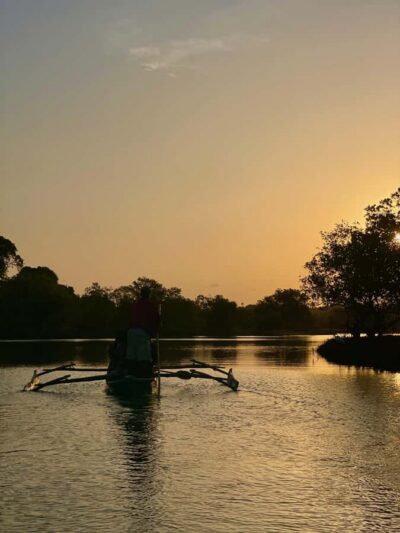
Sunset Canoe Tour along the River with Mangroves
Read our review →
Day Trip – Tsavo East National Park ( Man Eater Lions of Tsavo & Other Big Five)
Read our review →


Browse the lists this tour appears in